Skip to content

El proceso en la ciudad. El caso del traslado del Mercado Nacional de Hacienda de Liniers durante la última dictadura militar argentina

Article by Luján Menazzi
Revista Cuaderno Urbano. Espacio, cultura, sociedad N° 12, 2012. Resistencia: Universidad Nacional del Nordeste.

Luján Menazzi, Universidad de Buenos Aires, lmenazzi@yahoo.com.ar

Abstract:
The article analyses the interventions and urban processes initiated during the last military dictatorship (1976-1983) on the basis of a specific case: the failed attempt to move the Cattle Market outside the city of Buenos Aires. The aim is to reconstruct the political dynamics of this process, considering the political decision and the factors that prevented the eradication. This paper seeks to call into question certain statements that conceptualize the dictatorship as a total turning point in terms of urban policy, considering it all-powerful, deliberate and consistent. With this purpose the paper delves into two issues related to this case. On the one hand the different government areas responsible for intervening in urban which defended different positions. This entailed a very partial and inconsistent transformation of the area. Secondly, the resilience shown by some sectors/actors in hindering the political will to move the market.

Key words: Urban processes; Dictatorship; Buenos Aires City

Resumen:
El artículo aborda las intervenciones y procesos urbanos iniciados durante la última dictadura a partir de un caso específico: el intento frustrado de trasladar el Mercado de Hacienda fuera de la ciudad de Buenos Aires. Se pretende reconstruir la dinámica político-institucional de este proceso atendiendo a cómo se tomó la decisión política y a los factores que incidieron en frustrar el traslado. A partir del análisis del caso, se busca relativizar ciertos balances que conceptualizan a la dictadura como un punto de quiebre total en términos de políticas urbanas, asignándole un carácter todopoderoso, premeditado y coherente. En esta línea se señalan para este caso dos cuestiones. Por un lado las distintas áreas encargadas de intervenir sobre lo urbano y la heterogeneidad de figuras en el interior del elenco dictatorial que defendían intereses diversos, lo cual tuvo como correlato una transformación muy parcial y poco coherente del área. En segundo término la capacidad de resistencia que pusieron de manifiesto ciertos sectores vinculados con el quehacer del mercado, entorpeciendo la voluntad política de trasladarlo.

Palabras clave: Procesos urbanos; Dictadura; Ciudad de Buenos Aires

Download full text (in Spanish) > El proceso en la ciudad

Vista aérea de Mataderos

Vista aérea de Mataderos en 1965. Fuente: elaboración propia con base en imagen del Gobierno de la Ciudad de Buenos Aires (2010).

Ciudad en dictadura. Procesos urbanos en la ciudad de Buenos Aires durante la última dictadura militar (1976-1983)

Article by Luján Menazzi
Scripta Nova. Revista Electrónica de Geografía y Ciencias Sociales. Vol. XVII N° 429, 2013. Barcelona: Universidad de Barcelona

Luján Menazzi, Universidad de Buenos Aires, lmenazzi@yahoo.com.ar

Abstract:
The article analyzes the most important urban interventions, regulations and policies developed by both the national government and the municipal government of the last Argentine military dictatorship in the City of Buenos Aires. It seeks to investigate degree of coherence and consistency of the interventions examined, considering the government departments involved, the sense of interventions and the political and institutional dynamics developed. Based on this analysis, we can identify certain common characteristics of the interventions, such as the effort to achieve an ordered and hierarchical city, the great capacity to materialize initiatives and the will to carry out drastic and irreversible transformations. These common elements are linked to the general guidelines of the dictatorial government. At the same time, the review of the interventions also reveals a great heterogeneity in their sense, aesthetics and characteristics, while some of these interventions and regulations dialogued with previous urban traditions, materializing old projects and aspirations such as urban highways, widening of avenues, production of large public facilities and some elements of the Planning Code. In parallel, some interventions and regulations developed represented ruptures with these traditions, incorporating perspectives linked to the new tendencies of urbanism, as patrimonial and environmental protection initiatives, and the disincentive to the industrial profile of the city.

Key words: Buenos Aires, military dictatorship, urban processes, urban policies

Resumen:
El artículo analiza las intervenciones, reglamentaciones y políticas urbanas más importantes desarrolladas tanto por el gobierno nacional como por el gobierno municipal de la última dictadura militar argentina en la Ciudad de Buenos Aires. Se busca indagar los sentidos que adquieren estas intervenciones, el grado de coherencia y homogeneidad de las mismas, considerando los actores intervinientes, sus objetivos y la dinámica político institucional desarrollada. A partir del análisis se pueden identificar ciertas características que atraviesan a todas las intervenciones del período, como la búsqueda de lograr una ciudad ordenada y jerarquizada, la gran capacidad para materializar iniciativas y la voluntad de concretar transformaciones drásticas e irreversibles. Estos elementos comunes, se vinculan con los lineamientos generales del gobierno dictatorial. A su vez, el repaso por las intervenciones también deja en evidencia una gran heterogeneidad en el sentido, estética y características de las mismas, en tanto algunas de estas intervenciones y normativas dialogaban con tradiciones urbanísticas previas materializando antiguos proyectos y aspiraciones como las autopistas urbanas, ensanches de avenidas, la producción de grandes equipamientos públicos y algunos elementos del Código de Planeamiento. En paralelo se desarrollaron intervenciones y normativas que representaban quiebres con estas tradiciones incorporando miradas ligadas a las nuevas tendencias del urbanismo, como iniciativas de protección patrimonial y ambiental, y el desincentivo al perfil industrial de la ciudad.
Palabras clave: Ciudad de Buenos Aires, dictadura, procesos urbanos, políticas urbanas.

Palabras clave: Ciudad de Buenos Aires, dictadura, procesos urbanos, políticas urbanas

Download full text (in Spanish) > Ciudad en dictadura

Demoliciones

Demoliciones para la construcción de autopistas. Fuente: Zicovich Wilson, 1983.

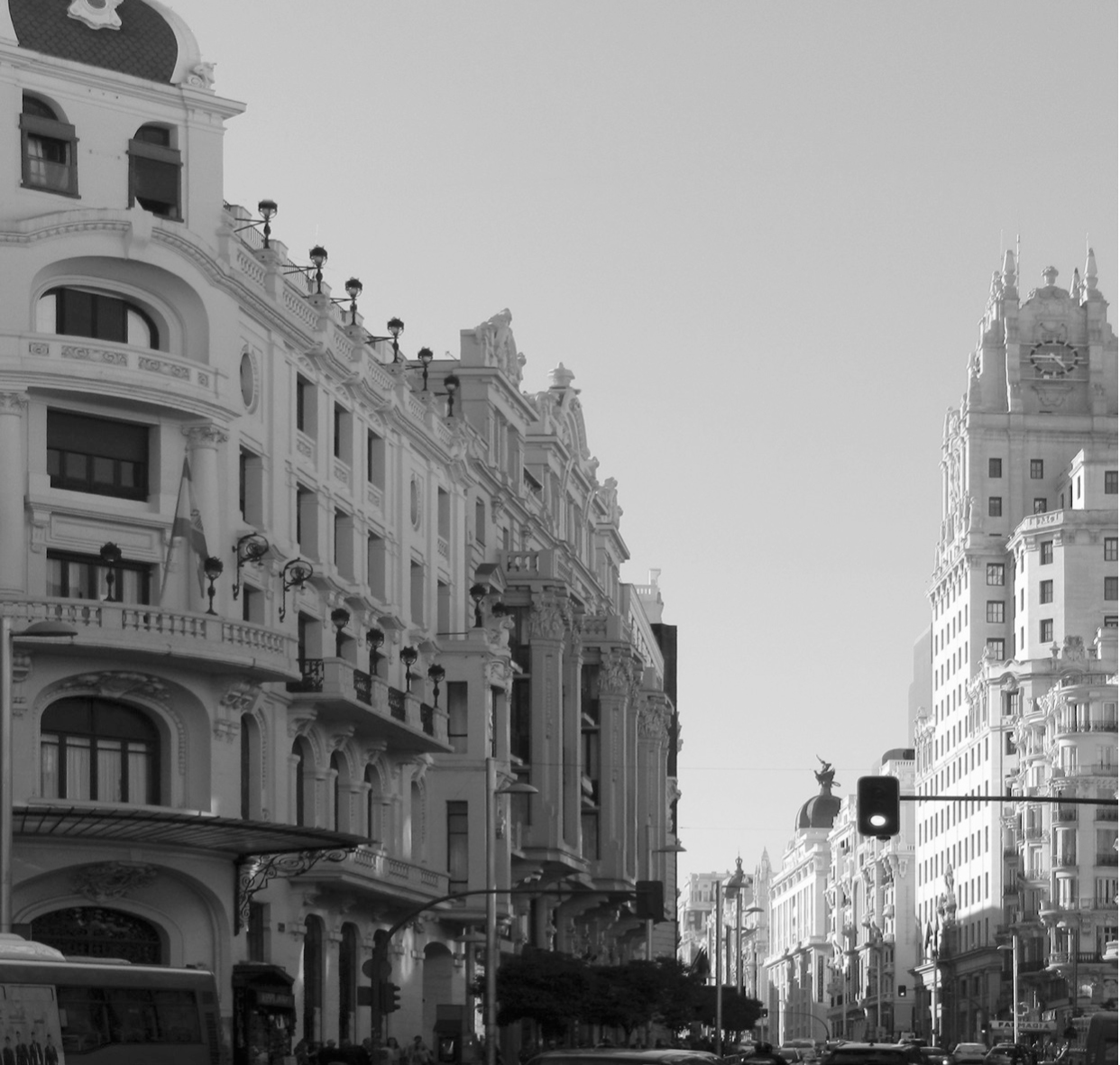
Madrid. Transformation einer Großstadt – Madrid. Transformación de una gran ciudad

Symposium
1 February 2018, 9h00 – 18h00
Thomas-Dehler-Straße -10787 Berlin
Organized by the FH-Potsdam/Potsdam School of Architecture and the TU-Eindhoven with the support of the Embassy of Spain in Berlin

Silvia Malcovati, Potsdam School of Architecture, malcovati@fh-potsdam.de
Bernd Albers, Potsdam School of Architecture, BA@berndalbers-berlin.de

Download invitation > Madrid_Symposium_Einladungskarte
Download programme > PROGRAMM

Madrid.jpg


Modernism, modernisation and the rural landscape

Call for papers,
MODSCAPES_conference2018
10-13 JUNE 2018 (Tartu, Estonia)

Simon Bell, Estonian University of Life Sciences, Simon.Bell@emu.ee
Axel Fisher, Université Libre de Bruxelles, axel.fisher@ulb.ac.be
Vittoria Capresi, Technische Universität Berlin, vittoria.capresi@tu-berlin.de

The impact of the Modern Movement and modernisation processes on rural landscapes in Europe and beyond is a widespread but little known, recognised or understood phenomenon which still exerts effects today. Within the third joint research programme of HERA (Humanities in the European Research Area) dedicated to “The uses of the past” which started in 2016, this subject is now being studied through several lenses within the MODSCAPES project.

Read more > MODSCAPES_conference2018

KEY DATES:

Abstracts should be submitted by January 7 2018 (23:59@EET) to the conference management system (via submission Platform https://modscapes.emu.ee/openconf.php).

Abstracts will be double peer reviewed and decisions on acceptance, rejection or revision will be sent out by February 9 2018.

Revised abstracts should be submitted by February 19 2018

Full paper text should be submitted by March 31 2018

Papers will be double peer reviewed and decisions on acceptance or revision will be sent out by April 30 2018

Final papers should be submitted by May 14 2018

eamfk7801_1-2b5f27c

Padise Kindergarten (Estonia). Architect: Anastasja Varus, 1970ies-80ies. Source: Museum of Estonian Architecture, Eesti Arhitektuurimuuseum (EAM Fk 7801)

Townscapes in transition. Transformation and reorganization of Italian cities and their architecture in the interwar period

Call for papers,
Amercian Association for Italian Studies
AAIS – Annual Conference / Session 24

Luigi Monzo, University of Innsbruck, info@luigimonzo.de

Social change after WWI led to an accelerated change in the built environment. Within a broad stylistic scope of architectural and urban design projects, the structural ‘DNA‘ of Italian historic cities offered a basic planning guideline. Historic paradigms determined not only trends in conservation but guided new approaches to architecture as well as urban and landscape design. The result was not a single strategy to ensure continuity in urban planning and architecture, but a multiplicity of formal principles and trends. The session proposes to clarify what methods Italian architects and urban planners used to take possession of a ‘Roman’ or ‘Italian’ building and planning tradition, and how they accommodated it to the modernization of their country.

Please submit via email a 200-250-word abstract of the presentation, a brief biographical note and affiliation to Luigi Monzo (info@luigimonzo.de) by December 30, 2017. Please comply with conference guidelines: https://aais.wildapricot.org/conference_guidelines.

The conference languages are Italian and English.
Session organizers and chairs:

Luigi Monzo, University of Innsbruck (Austria)
Email: info@luigimonzo.de

Carmen M. Enss, University of Bamberg (Germany)
Email: carmen.enss@uni-bamberg.de

Download call for papers: AAIS_2018_Panel-24_CFP_v2.0_web

Paniconi_Fiuggi_Landschaftsplan_AA_V_1933_s327_high_q

Mario Paniconi: landscape plan for Fiuggi. Source: Architettura 1933, p. 327

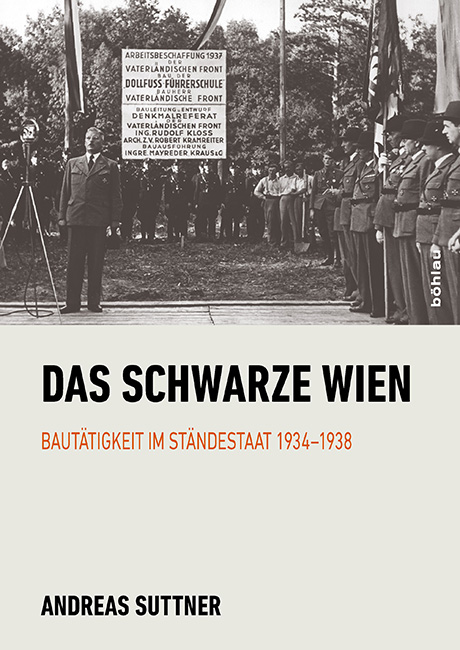
Das schwarze Wien. Bautätigkeit im Ständestaat 1934-1938

Book by Andreas Suttner, 288 pages, Wien Köln Weimar: Böhlau Verlag, 2017

Harald Bodenschatz, Technische Universität Berlin, harald.bodenschatz@tu-berlin.de

Während der nationalsozialistische Städtebau in Wien inzwischen besser erforscht ist, war das Planen und Bauen im österreichischen Ständestaat bis vor kurzem nahezu unbekannt. Mit dem Buch „Das schwarze Wien“ liegt endlich ein Werk vor, das einen Einblick in ein vergessenes, verdrängtes Kapitel europäischen Städtebaus erlaubt. Die Stärke des Buches liegt in der – keineswegs selbstverständlichen – Darstellung der geplanten wie gebauten Projekte vor dem Hintergrund ihrer jeweiligen politischen, wirtschaftlichen und ideologischen Verhältnisse. Dazu kommen Hinweise auf den Umfang der Bautätigkeit bzw. deren Bedeutung, ein Bezug zur Zeit vor und (zumindest ansatzweise) nach dem Ständestaat sowie ein Blick auf internationale Referenzen. Mit der „Liste der Bauwerke“ im Anhang wird eine Grundlage für weitere Forschungsarbeiten in diesem Feld geschaffen.

dasschwarzewien

Berliner Wohnungsbau 1933-1945. Mehrfamilienhäuser, Wohnanlagen und Siedlungsvorhaben

Book by Michael Haben, 871 pages, Berlin: Gebr. Mann Verlag, 2017

Harald Bodenschatz, Technische Universität Berlin, harald.bodenschatz@tu-berlin.de

„Das Interesse am Berliner Wohnungsbau von 1933 bis 1945“, so beginnt Michael Haben sein neues kolossales Grundlagenwerk, „ist verhältnismäßig gering – zumindest wenn man die bisherigen Veröffentlichungen zu diesem Thema betrachtet.“ Es war – geblendet durch den Tunnelblick auch die Papiermonumentalarchitektur der NS-Führung – in der Tat so gering, dass manche glaubten, in Berlin gäbe es nur wenig oder womöglich gar keinen NS-Bau-Wohnungsbau. Haben stellt diese verzerrte Sichtweise grundlegend und überzeugend in Frage. Er präsentiert nicht nur eine nahezu flächendeckende Bestandsaufname von Mehrfamilienhäusern, Wohnanlagen und Siedlungen, sondern verdeutlicht auch die sich stetig verändernden wirtschaftlichen und politischen Rahmenbedingungen des Berliner Wohnungsbaus während der NS-Zeit. Das Grundlagenwerk beruht auf einer Doktorarbeit, die Michael Haben an der TU Dortmund mit sehr gutem Erfolg verteidigt hat. Betreuer waren Wolfgang Sonne und Jörn Düwel.

berliner-wohnungsbau-1933-1945_9783786127864

Weltkulturerbe-Stadt Ilha de Moçambique. Auch ein Erbe Salazars

Article by Harald Bodenschatz, together with Uwe Altrock and Christian von Oppen
Mosambik Rundbrief 94

Harald Bodenschatz, Technische Universität Berlin, harald.bodenschatz@tu-berlin.de

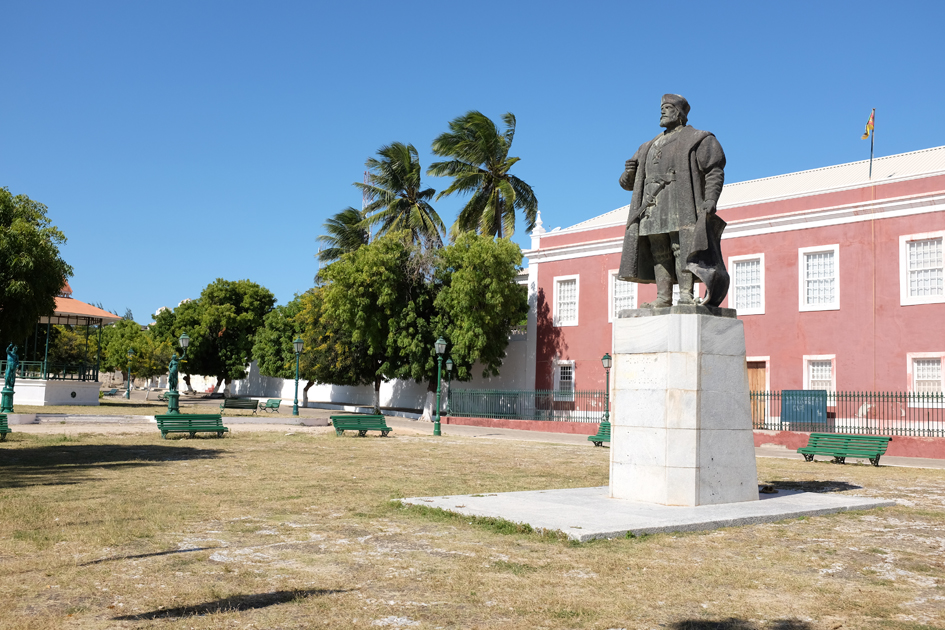
Vasco da Gama

Vasco da Gama’s statue, the “discoverer” of Ilha de Moçambique, in the main square of the island, in front of the former government palace. Photograph: Christian von Oppen 2016.

Download full Text (in German): Auch ein Erbe Salazars 2017

Beauty and Crime – Asmara (Eritrea) in the UNESCO’s World Heritage List

Harald Bodenschatz, Technische Universität Berlin, harald.bodenschatz@tu-berlin.de
Piero Sassi, Bauhaus-Universität Weimar, piero.sassi@uni-weimar.de

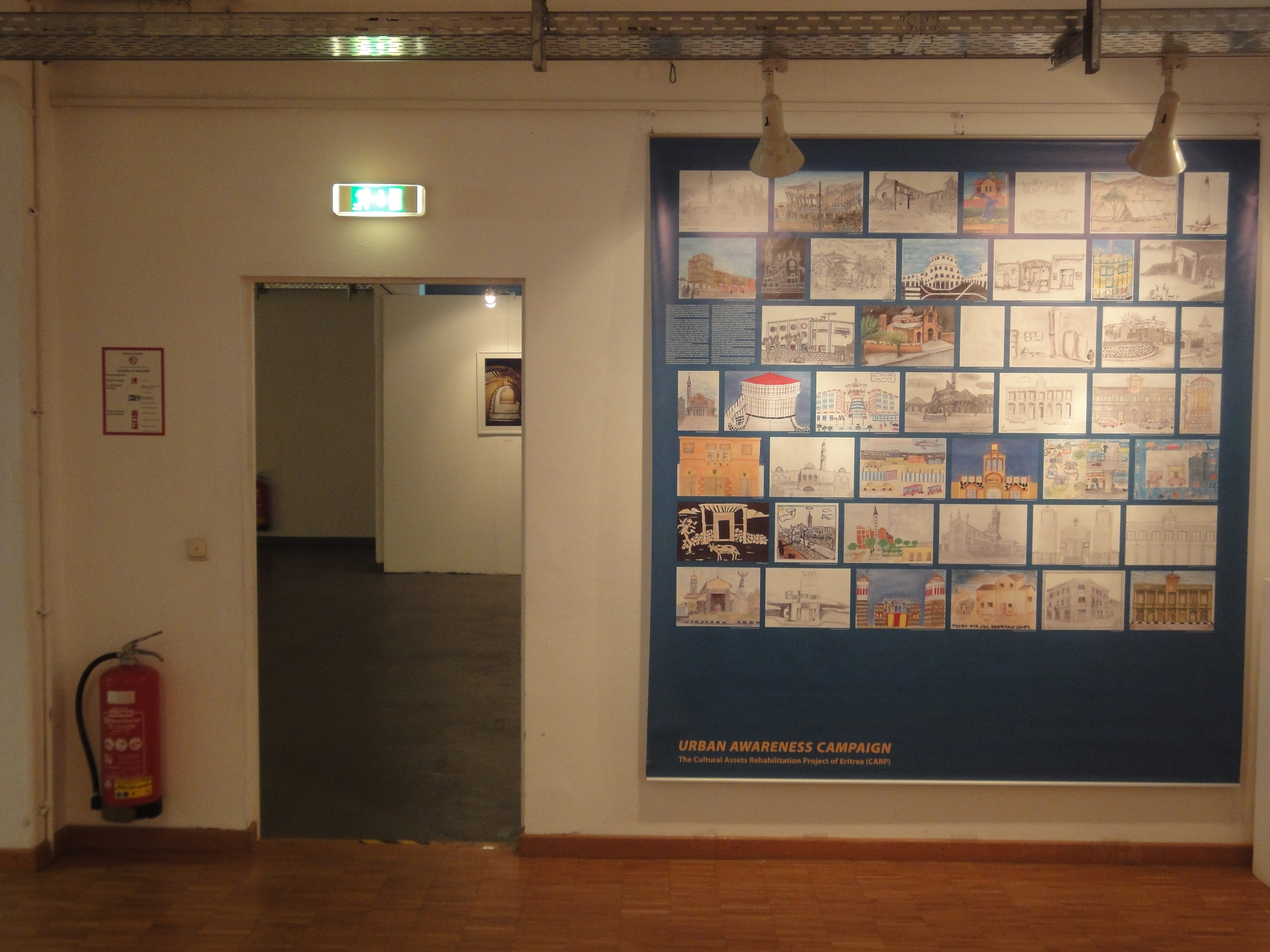
Asmara_Ausstellung_Bodenschatz_2012

By drawing, children and youngsters deal with the Italian built heritage in Asmara. The exhibition “Asmara. Afrikas heimliche Hauptstadt der Moderne” (Munich 2012) presented the impressive drafts. Photograph: Harald Bodenschatz, CC BY-NC-ND 4.0.

Last week the city of Asmara, Eritrea, was added to the UNESCO’s World Heritage List. A great news. From now on the city and its architectural and urbanism legacy will be better preserved for the coming generations. An increasing attention will be drawn to the city and its built heritage. But what is the message behind Asmara’s new UNESCO designation?

UNESCO’s explanatory statement is: “[Asmara] is an exceptional example of early modernist urbanism at the beginning of the 20th century and its application in an African context.” Such a motivation is insufficient and shows meaningful deficits both in the argumentation concerning the urbanism product and in the explication of the production conditions under which the World Heritage was built.

Asmara is presented as an example of „early modernist urbanism“. Indeed, a part of its architectural legacy can be considered as belonging to the rationalism, but not its urban design. Asmara distinguishes itself through its combination of (frequent) modern architecture and traditional urban design. This combination can also explain – to a certain extent – Asmara’s attractiveness nowadays.

UNESCO’s summary doesn’t consider the reasons and actors. The description mentions the “Italian colonial power”, but neglects racist and segregating ideas behind Asmara’s urban design and architecture. The fact that Asmara was built as a part of the expansion programme of Fascist Italy in Eastern Africa, a deciding aspect, is here completely forgotten. The city was supposed to become a “bridge head” for Abyssinia’s aggression (1935/1936) and part of the Fascist Empire, proclaimed in 1936. In that cruel war, condemned by the League of Nations, fascist troops made also use of poison gas.

In our opinion, UNESCO has not just the responsibility to motivate its designations to World Heritage by looking at the form, but also, in doing so, to enrich the knowledge about the background of its heritage. In the case of Asmara, this is not fulfilled. This aspect becomes even more clear when reading the press commentaries of the last days. By commenting the new UNESCO designation, they were enthusiastic about Asmara’s wonderful architecture, but they completely neglected to mention the war crimes that paved the way to its construction.

Thus, we think it is misleading to aknowledge the value of Asmara’s built heritage without discussing the dictatorial production conditions that made its implementation possible. Therefore, we hope that the UNESCO designation will become a chance to consider the construction of Asmara as a part of the imperial and criminal project of the Italian dictatorship. This would be a significant step towards a critical discussion of this forgotten chapter of 20th Century European history.

UNESCO official description (UNESCO page)
Asmara: a Modernist City of Africa

Located at over 2000 metres above sea level, the capital of Eritrea developed from the 1890’s onwards as a military outpost for the Italian colonial power. After 1935, Asmara underwent a large scale programme of construction applying the Italian rationalist idiom of the time to governmental edifices, residential and commercial buildings, churches, mosques, synagogues, cinemas, hotels, etc. The property encompasses the area of the city that resulted from various phases of planning between 1893 and 1941, as well as the indigenous unplanned neighbourhoods of Arbate Asmera and Abbashawel. It is an exceptional example of early modernist urbanism at the beginning of the 20th century and its application in an African context.

Historical City Centres: Stage and Showcase of Dictatorships

Lecture series
21 April 2017, 14h00 – 19h00
Instituto Superior Técnico, Lisbon
Main Building, Salão Nobre
Coordination Ana Tostões in collaboration with Bauhaus—Universität Weimar and Technische Universität Berlin

Ana Tostões, Técnico-Universidade de Lisboa, ana.tostoes@tecnico.ulisboa.pt

2017 PhD Week Spring_en