Skip to content

Posts from the ‘Italy’ Category

20th Century European Urbanism: Towards a Shared History

Lecture series at the Bauhaus University Weimar

Piero Sassi, Bauhaus-Universität Weimar, piero.sassi@uni-weimar.de
Max Welch Guerra, Bauhaus-Universität Weimar, max.welch@uni-weimar.de

The debate on a common European identity is by no means novel. However, over the past few years the escalation of multiple crises and the consequent discussion about the future of the European Union have extended this debate to ever larger segments of society. A shared European history is a fundamental part of the European identity. Discussing it is today more important than ever. Professional and cultural exchange throughout Europe was very intense in the 20th century. It had a strong effect on urbanism in the individual countries. Therefore, the history of urbanism in Europe during the 20th century should be discussed in an international context, as a shared history. Within the lecture series, we will tackle some major issues, such as housing policies, large-scale projects and urban renewal in different geographical contexts (Germany, Italy, Spain, Portugal, France, Russia and Cyprus) and historical periods. On the one hand, this will allow to underline similarities between case studies and to recognize the exchange of models, experts and know-how between different countries. On the other hand, by considering the single case study in a broader international context, this will make it possible to understand its peculiarities. Doing so, the lecture will take on a European perspective.

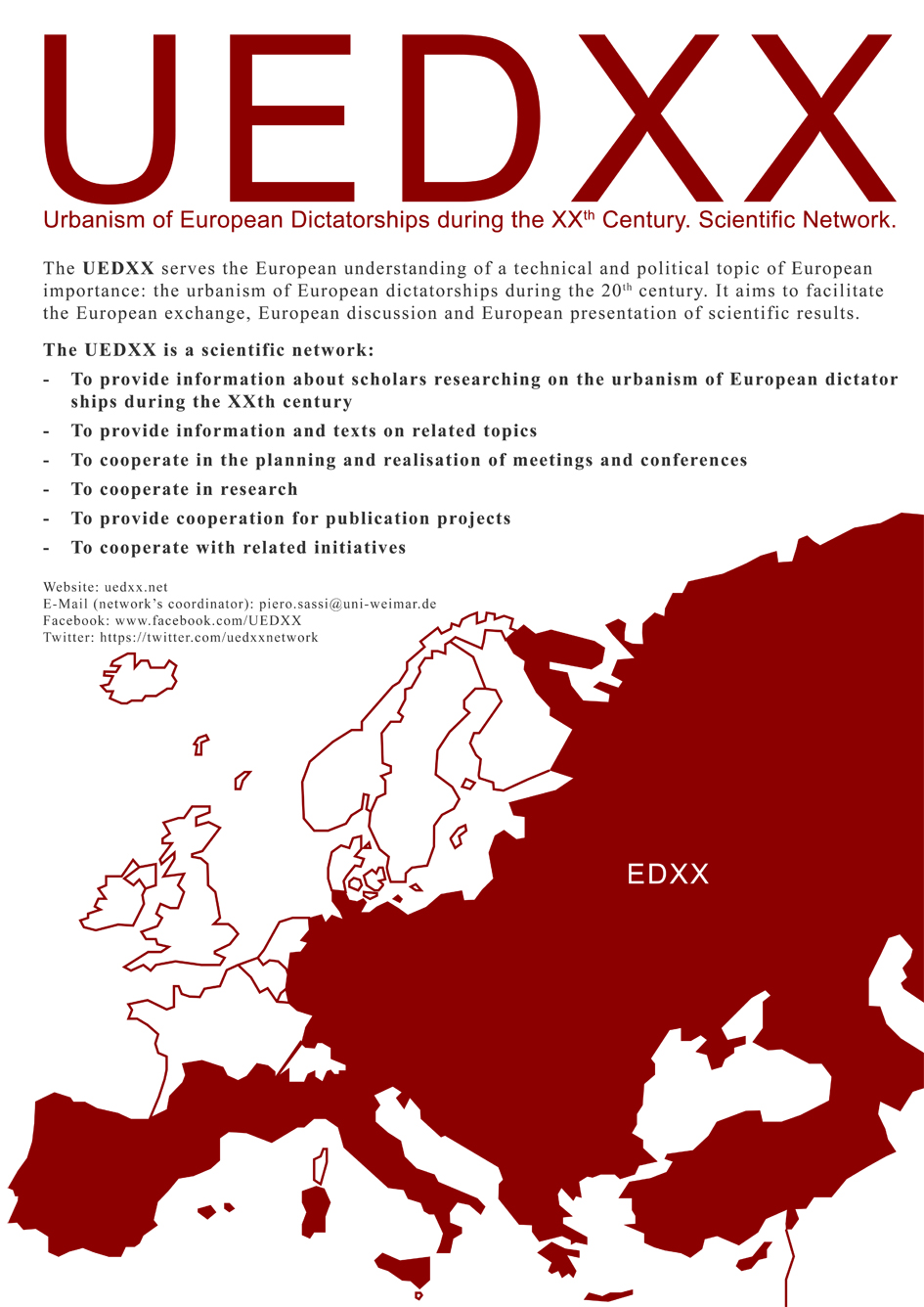
Download programme: 20th_Century_European_Urbanism_20042015 Urbanism in Europe_Karte Sponsored by the Federal Ministry of Education and Research
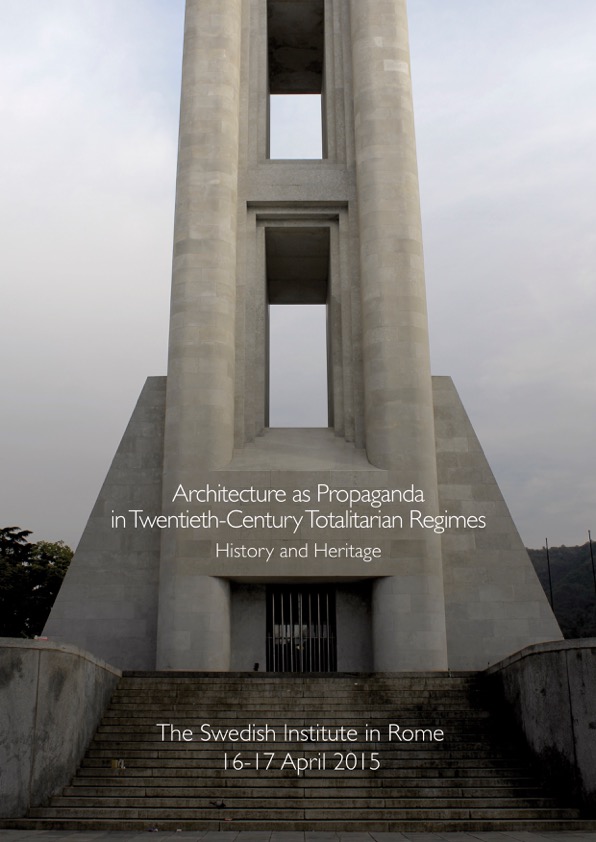
Architecture as Propaganda in Twentieth-Century Totalitarian Regimes. History and Heritage

Conference at the Swedish Institute in Rome, 16-17 April 2015

Håkan Hökerberg, Istituto Svedese di Studi Classici a Roma, hkb@isvroma.org

The aim of the conference is to map and analyse the rhetorical architecture of twentieth-century European totalitarian regimes. Essential issues are to define rhetorical architecture, to examine if certain architectural styles tend to be associated with totalitarian regimes and how ideological propaganda is promulgated through architecture. An important aspect is how rhetorical architecture left behind by totalitarian regimes may be integrated into present day democratic states, and its potential as modern urban heritage. The current attitude toward fascist architecture in Italy will be discussed in relation to European countries that have a similar history but have developed different approaches to their controversial architectural heritage. The aim is to illustrate the consequences of these different approaches and also how history is used, what processes shape national identity and how heritage is produced.

The conference is organized by Håkan Hökerberg (Istituto Svedese di Studi Classici a Roma).

Download conference programme: Programme_Architecture_as_Propaganda

Poster

BZ ’18-’45: Un percorso espositivo nel Monumento alla Vittoria. Bozen/Bolzano, Italia

Piero Sassi, Bauhaus-Universität Weimar, piero.sassi@uni-weimar.de

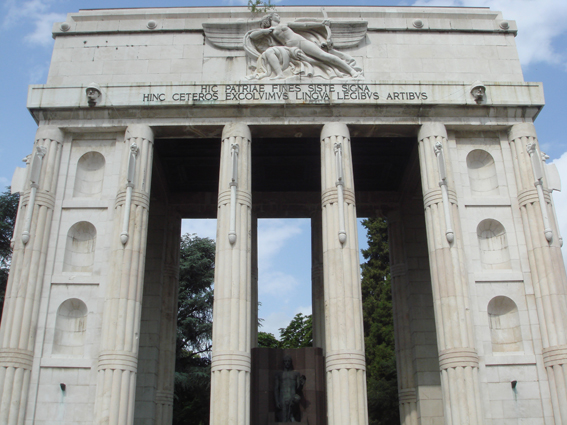
Uno dei capitoli più importanti e difficili della storia del fascismo italiano è quello rappresentato dall’italianizzazione forzata dell’Alto Adige. A Bolzano, l’urbanistica e l’architettura furono parti integranti di questo processo e lasciarono tracce molto profonde, tuttora facilmente riconoscibili. Uno dei simboli delle politiche urbane di quegli anni è il Monumento alla Vittoria, progettato dall’architetto Marcello Piacentini e costruito tra il 1926 e il 1928. Questa importante testimonianza del periodo dittatoriale è stata recentemente restaurata. Oggi ospita nel suo piano interrato il percorso espositivo “BZ ’18–’45. Un monumento, una città, due dittature” che, all’interno di una riflessione ampia sulle dittature fascista e nazionalsocialista, analizza gli interventi architettonici e urbanistici realizzati a Bolzano durante il Ventennio. Quello del Monumento alla Vittoria non rappresenta un caso isolato. A Predappio, città natale di Mussolini, si discute oramai da diverso tempo della possibilità di realizzare un museo sul fascismo nella ex Casa del Fascio e dell’Ospitalità (post del 28.10.2014). Queste iniziative, se connesse ad altre simili a livello internazionale, potrebbero rappresentare i primi e importanti passi di un percorso verso la rielaborazione europea della difficile eredità urbanistica – ma non solo – del fascismo italiano.

Bozen_1

Monumento alla Vittoria, Bolzano. Realizzato tra il 1926 e il 1928. Foto: Harald Bodenschatz 2008

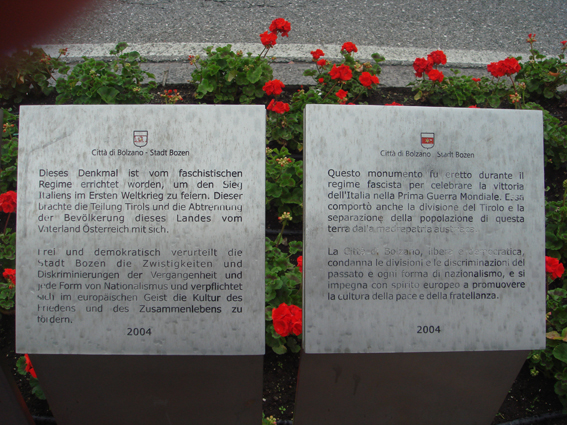
Bozen_2

Difficile tentativo di presa di posizione da parte della Città di Bolzano rispetto al Monumento alla Vittoria, nel 2004. Foto: Harald Bodenschatz 2008


Informazioni sul tema:

auf Deutsch

Museen Südtirol
http://www.museen-suedtirol.it/de/museen.asp?muspo_id=1444

Siegesdenkmal
http://www.siegesdenkmal.com/de.html

Das war überfällig, Taz, 12.08.2014
http://www.taz.de/1/berlin/tazplan-kultur/artikel/?ressort=ku&dig=2014%2F08%2F12%2Fa0105&cHash=38d4fb4e12f2f3b809c2e57c4017228b

in italiano

Musei in Alto Adige
http://www.musei-altoadige.it/it/musei.asp?muspo_id=1444

Monumento alla Vittoria
http://www.monumentoallavittoria.com/it.html

Urbanism and Dictatorship – A European Perspective

Publication edited by Harald Bodenschatz, Piero Sassi and Max Welch Guerra (Birkhäuser Verlag, Bauwelt Fundamente 153, 2015)

Harald Bodenschatz, Technische Universität Berlin, harald.bodenschatz@tu-berlin.de
Piero Sassi, Bauhaus-Universität Weimar, piero.sassi@uni-weimar.de
Max Welch Guerra, Bauhaus-Universität Weimar, max.welch@uni-weimar.de

Urban design under European dictatorships in the first half of the twentieth century must be considered in an international context, as the professional and cultural exchange between European countries was – beyond conflicts and political orientations – very intensive. This European perspective allows us to recognize the specificities of old and new forms of dictatorship!

Download flyer: Urbanism_and_Dictatorship_2015

Urbanism_and_Dictatorship

Urban Design and Authoritarian Government – European Dictatorships in the 20th Century in International Perspective

Roundtable Discussion funded by the German Research Foundation at the University of Kassel on 25 and 26 August 2014

Uwe Altrock, Universität Kassel, altrock@asl.uni-kassel.de
Harald Kegler, Universität Kassel, harald_kegler@yahoo.com

To strengthen the network of researchers working on 20th century dictatorships in Europe and urban development, researchers from the University of Kassel, TU Berlin and Bauhaus University Weimar hosted a roundtable discussion. About 20 scholars from Germany and abroad discussed avenues for a more systematic research and perspectives for the funding of research networks. The underlying idea was that there is a lot of detailed research in a number of European countries that have witnessed dictatorships in the 20th century especially when it comes to matters of architectural form, whereas a broader approach transcending this narrow perspective is only gradually established. The following questions seem to need a more thorough reasearch approach that is truly international in nature and may allow for comparisons and for significant contributions in the context of the contemporary perception of legacies of dicatorships in a democratic environment:

How is an authoritarian system of urban design established?
Are there specific products and traditions of urban form?
How is urban design in dictatorships influenced by international exchange both in political and professional terms?
What are the specific features of the production of urban space in dictatorships when looking beyond representational urban design for the state itself?
The roundtable discussion offered an opportunity for productive interdisciplinary exchange between scholars from the fields of architecture, planning, history, history of art, preservation and political science that have all contributed to the overall theme of the roundtable discussion.
In the future, research activities of the participants will build on completed and on-going projects dealing with the situation in, among others, Germany, the Soviet Union, Italy, Spain, Portugal, and the Balkans, and linking it more actively with the activities of networks such as UEDXX.

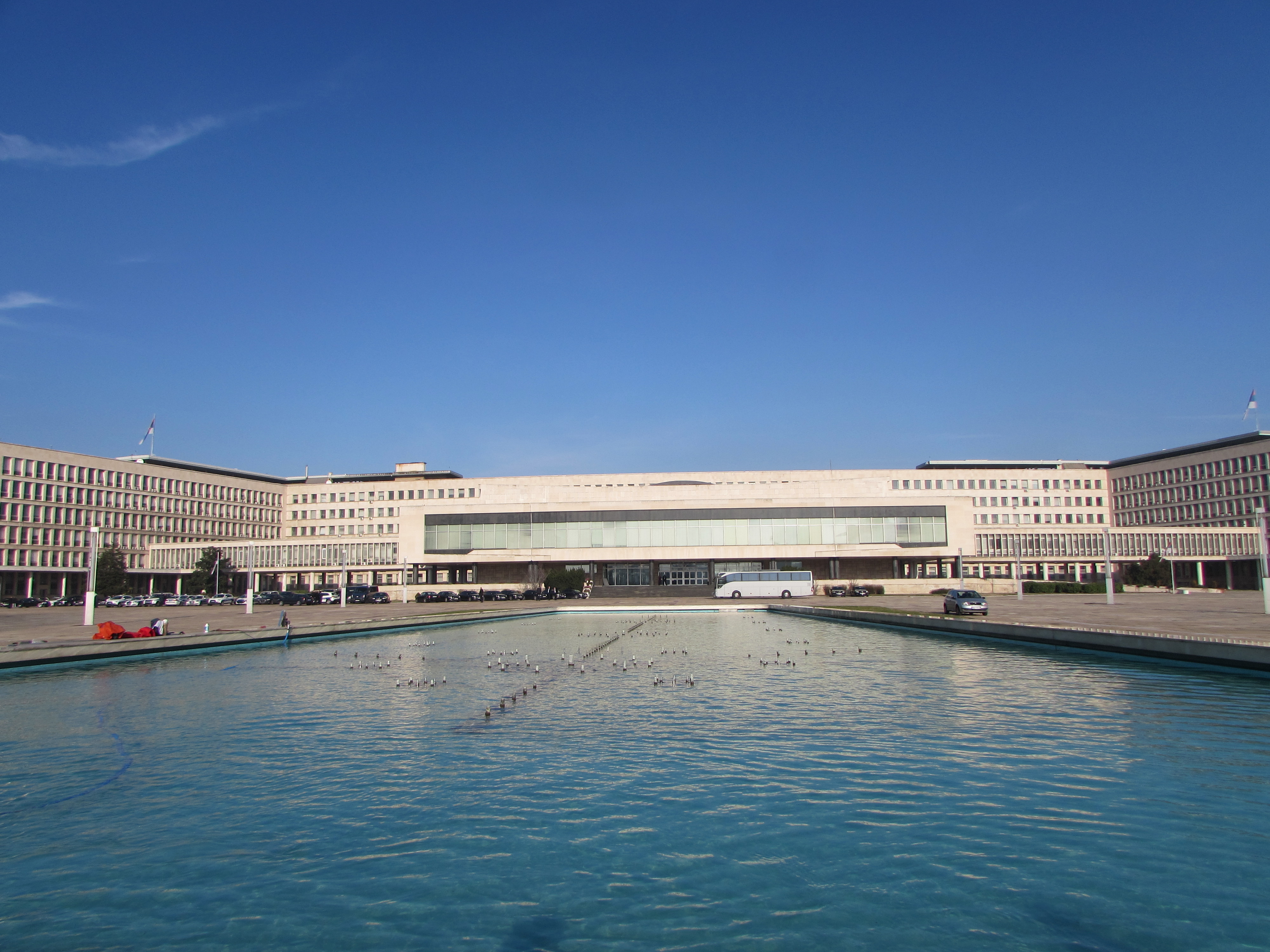
1 ehemal parlament jugoslawiens 1961

Former Parliament of Yugoslavia (inaugurated in 1961), nowadays Parliament of Serbia. The built legacy left behind by the dictatorship in former Yugoslavia was discussed during the presentation “Research on Forgotten Dictatorships” (Harald Kegler). Photograph by Harald Kegler 2014, CC BY-NC-ND 4.0

Urban Design for Mussolini, Stalin, Salazar, Hitler and Franco during the Interwar Period

Session M50 at the 12th International Conference of the European Association for Urban History (Lisbon, September 3–6, 2014)

Christian von Oppen, Technische Universität Berlin, christian.von.oppen@uni-weimar.de

Earlier this year, the UEDXX for the first time participated in the European Association for Urban History (EAUH) biannual conference in Lisbon. The EAUH conference provides a multidisciplinary forum for the diverse community of urban scholars. Following this multidisciplinary approach, Prof. Dr. Harald Bodenschatz, DI Christian von Oppen and Prof. Dr. Max Welch Guerra (founding members of the network) organized a session about urban design under the European dictatorships of the 20th Century (“Urban Design for Mussolini, Stalin, Salazar, Hitler and Franco during the Interwar Period”, M50). The session mainly focused on an international approach, which was underlined by six contributions representing six different countries.

Due to the forced repression of other European countries, as well as the cultural diplomacy of the most powerful dictatorships of the 20th century (for example, the Soviet Union, Nazi Germany, and Fascist Italy), urban history under dictatorial regimes is a topic with broad international reference. Nevertheless, this important topic is mainly discussed within the single national contexts. During the session, the different contributions made clear that the understanding of the common European history under dictatorships is determined by different national experiences. It is necessary to overcome this gap to achieve a shared understanding of the European history of the 20th Century.

Accepted papers will be published on this website.

Conference session (M50):
http://www.eauh2014.fcsh.unl.pt/index.php?conference=conference&schedConf=eauh2014&page=schedConf&op=trackPolicies

Download short report (German): Bericht_SessionM50

140829_UEDXX

The UEDXX network was presented during the networking event on Thursday, September 4, 2014, CC BY-NC-ND 4.0.

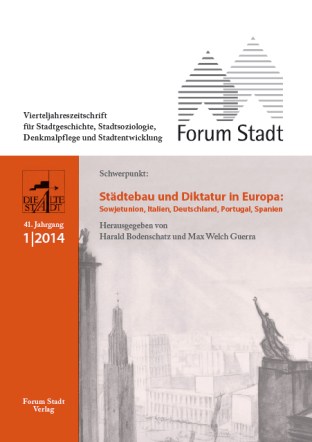
Städtebau und Diktatur in Europa: Sowjetunion, Italien, Deutschland, Portugal, Spanien

Forum Stadt. Vierteljahreszeitschrift für Stadtgeschichte, Stadtsoziologie, Denkmalpflege und Stadtentwicklung. 41. Jahrgang 1/2014

Publication edited by Harald Bodenschatz and Max Welch Guerra

Harald Bodenschatz, Technische Universität Berlin,  harald.bodenschatz@tu-berlin.de

2014-1 Zeitschrift Forum Stadt.indb

Aus dem Editorial:

„Die deutschsprachige Forschung zur Städtebaugeschichte der europäischen Diktaturen der Zwischenkriegszeit hat sich aus verständlichen Gründen jahrzehntelang auf das nationalsozialistische Deutschland konzentriert, Studien über den Städtebau anderer Diktaturen dieser Jahre blieben eine Ausnahme. Dies ändert sich langsam. Dabei sind ganz unterschiedliche Sichtweisen zu beobachten, vor allem historische, kunst- bzw. bauhistorische, planungsgeschichtliche sowie politik- bzw. sozialwissenschaftliche Betrachtungen, die oft wenig untereinander kommunizieren. Damit sind zwei Käfige benannt, in denen sich die noch tastende und wenig systematisch vernetzte Forschung bewegt: nationale Grenzen und disziplinäre Schranken.

Das folgende Heft versteht sich als ein weiterer Schritt in Richtung vernetzter Forschung über nationale und disziplinäre Grenzen hinaus. Es thematisiert unterschiedliche europäische Diktaturen der Zwischenkriegszeit, vor allem solche längerer Dauer, und die Autoren repräsentieren unterschiedliche Disziplinen: Architektur, Kunstgeschichte, Kulturphilosophie, Planungswissenschaften, Politikwissenschaften und Soziologie. Gemeinsam ist ihnen allen eine langjährige Erfahrung in der Kooperation mit anderen Disziplinen.“

Inhaltsverzeichnis:
http://d-nb.info/1048465764/04

Discussion over the reuse of the former „Casa del Fascio e dell’Ospitalità“ in Predappio, Italy. A new museum about fascism for the European discussion?

Piero Sassi, Bauhaus-Universität Weimar, piero.sassi@uni-weimar.de

1

Casa del Fascio e dell’Ospitalità di Predappio, costruita tra il 1934 e il 1937. Foto: Harald Bodenschatz 2013, CC BY-NC-ND 4.0.

A Predappio nacque il 29 luglio 1883 Benito Mussolini. La città, un piccolo centro della Romagna, è ancora oggi fortemente caratterizzata dal lascito architettonico e urbanistico del Ventennio. Nel corso degli anni, in particolare da quando vi venne trasferita la salma del dittatore nel 1957, Predappio è stata sempre più spesso identificata come luogo di culto dei neofascisti. A questa immagine negativa si è opposta negli ultimi anni in maniera decisa la giunta comunale di centrosinistra, guidata da Giorgio Frassineti (PD). A Predappio sono state organizzate diverse iniziative volte a promuovere una “discussione europea” sulla storia del fascismo italiano. Una di queste è stata la mostra “Il giovane Mussolini” (2013). Alle scorse elezioni comunali, la lista “Predappio Bene Comune”, guidata da Frassineti, ha proposto nel suo programma il riutilizzo della vecchia „Casa del Fascio e dell’Ospitalità“, oggi in disuso, per allestirvi un museo sul fascismo rivolto ad un pubblico internazionale. Se questo progetto verrà realizzato, sarà un contributo di grande importanza alla rielaborazione europea della difficile eredità delle dittature del XX secolo.

Articoli sul tema:

Programma Elettorale della Lista “Predappio Bene Comune” (pp. 24-27)
https://drive.google.com/file/d/0B_IkwkQ0CwX7U0JRWEVVdUE2aUk/edit?pli=1

“Kampf gegen den Schatten” (Tagesspiegel, 31.05.2014)
http://www.tagesspiegel.de/kultur/museum-fuer-predappio-kampf-gegen-den-schatten/9971348.html

“‘Un museo del fascismo a Predappio’: la proposta del sindaco pd” (Repubblica Bologna, 23.4.2014)
http://bologna.repubblica.it/cronaca/2014/04/23/news/un_museo_sul_fascismo_a_predappio_la_proposta_del_sindaco_pd-84274508/