Skip to content

Posts from the ‘Spain’ Category

 ¿QUÉ HACER CON EL PATRIMONIO INCÓMODO? Reflexiones en torno al Arco de la Victoria de Madrid

International symposium, December 14-15 2023 (Complutense University of Madrid)

Carolina Rodríguez-López, Complutense University of Madrid, carolinarodriguez@ghis.ucm.es

A Global Campus

International Congress, November 22-24 2023 (Complutense University of Madrid)

Carolina Rodríguez-López, Complutense University of Madrid, carolinarodriguez@ghis.ucm.es

About the project “A Global Campus: universities, cultural transfers and experiencies in the 20th century”

This project aims to analyze the social, cultural, political and diplomatic dimension of university life, taking the space and the notion of campus (real, symbolic, imagined or transferred) as the concrete setting for these developments.

We understand the university campus from a double dimension: as a continent and as a space full of content and meanings. Our approach to this dual object of study, the campuses and the experiences developed in them, combines points of view from different domains.

The main objective of this project is to offer a global portrait of the university campuses in all their dimensions and interrelation capacities in order to know about them those aspects that go far beyond the basic functions expected of the university: teaching and research.

We have had at least three frames in which include and share our researches: the Complutense Research Group EXPEhistoria: ideas, knowledge and experiences, the Complutense Seminar on Universities’ History and CIAN- Journal of the History of the Universities.

Further information on the research project > Un Campus Global

Download the conference program  > International Congress 2023

Reuse

Symposium, 1-2 July 2023

Akademie der KünstePariser Platz 410117 Berlin

HG Merz, Harald Bodenschatz, Benedikt Goebel, Carolin Schönemann, Akademie der Künste, harald.bodenschatz@tu-berlin.de

The symposium accompanies the exhibition on planning and building in the National Socialist era and examines how the legacies of the dictatorships of the first half of the 20th century are dealt with in Europe. The speakers will present examples of places in Germany, Italy, Poland, Spain and Ukraine. European politics of remembrance are often dominated by national tunnel vision. It is therefore time for a cultural and political exchange about the respective approaches.

The culture of remembrance that Germany cultivates today differs considerably from that found in other countries. In Italy, experts recognise virtually every significant work of architecture and type of building that came about and every architect who worked under the dictatorship. Buildings are declared works of art and are often placed outside of their historical context. Architecture and symbols of the dictatorship such as the fasci — bundles of several wooden twigs, often called “bundles of twigs” — and Fascist calendar numbering are not only preserved and maintained, but are also restored and renovated. For the most part, on-site historical explanations are not provided.

During the Putin era in Russia, the memory of the Stalinist period has been gradually nationalised, steered and transformed into a culture of reverence. In Spain, a culture of forgetting was for decades supported through legislation. This is currently changing, as shown by the reinterment of the remains of General Franco in 2019, and by renaming the Valle de los Caídos (“Valley of the Fallen”) the Valle de Cuelgamuros (“Valley of Cuelgamuros”) in 2022 — Spain’s largest mass grave, which buries more than 30,000 victims from the Spanish Civil War and which may no longer be used by Franco nostalgics for rallies in the future. In the European politics of remembrance, national tunnel vision is a widespread phenomenon. A cultural exchange on how to deal with the legacies of the dictatorships rarely takes place — Europe remains a task in this field as well.

Further information > Akademie der Künste

Universitätsarchitektur und Diktatur – Eine europäische Perspektive

Lecture by Harald Bodenschatz
Open Lecture Series “Bauen für die Wissenschaft” (Technische Universität Berlin)
Thursday, May 16, 2019, 6 pm
Humboldt-Universität, Berlin, Unter den Linden 6, HS 1072

Harald Bodenschatz, Technische Universität Berlin, harald.bodenschatz@tu-berlin.de

Neue Universitätsstädte waren ein zentrales Thema des Städtebaus im 20. Jahrhundert, in Europa, vor allem aber auch in den USA. Besondere Aufmerksamkeit auf den Bau neuer Universitätsstädte legten die europäischen Diktaturen der ersten Hälfte des 20. Jahrhunderts. Die città universitaria in Rom ist zweifellos das bekannteste Beispiel einer solchen Neugründung. Universitätsstädte werden in der europäischen Städtebaugeschichtsschreibung bis heute oft übersehen, vor allem der Bau von Universitätsstädten in diktatorischen Systemen. Universitätsstädte scheinen nicht in das verbreitete Bild von Diktaturen zu passen, die oft als rückwärtsgewandt, antimodern, stagnierend, als Totengräber der Wissenschaften gezeichnet werden. Eine solche Sichtweise verkennt den Charakter der Diktaturen. Für die Durchsetzung ihrer Programme, ihrer Wege zur Modernisierung waren sie auf Experten dringend angewiesen, möglichst auf Experten, die nicht mehr aus der Zeit vor den Diktaturen stammten.

Download invitation > Bodenschatz_Universitätsarchitektur und Diktatur

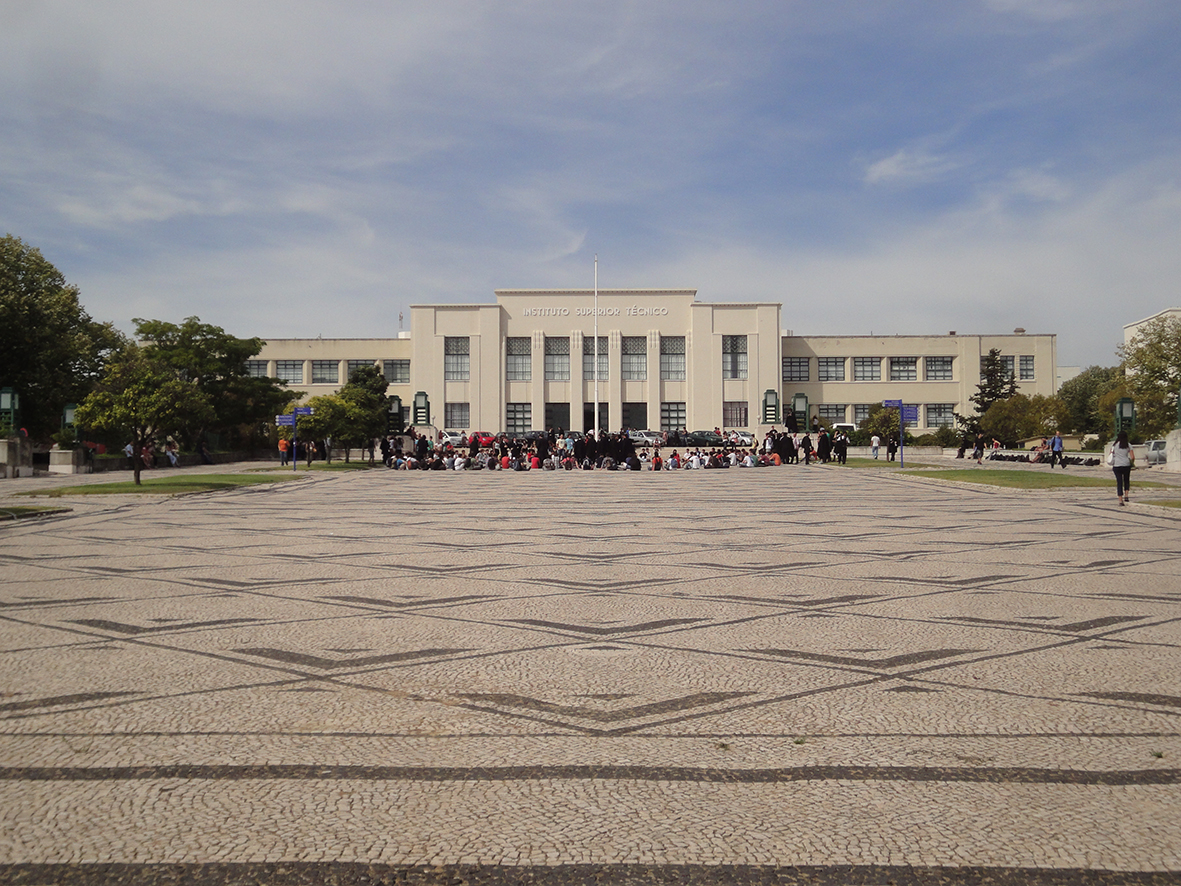
Technische Hochschule von Lissabon_Bodenschatz

Technische Hochschule von Lissabon (Instituto Superior Técnico), von Pardal Monteiro geplant und errichtet 1928 bis 1937. Foto Harald Bodenschatz, 2012, CC BY-NC-ND 4.0

Wenig beachtet, ja verdrängt und vergessen: Diktatur, Architektur und Städtebau in Portugal und Spanien

Lecture by Harald Bodenschatz
Munich, Bayerischen Akademie der Schönen Künste
Tuesday, October 9, 2018, 7 pm
Introduction by Winfried Nerdinger

Harald Bodenschatz, Technische Universität Berlin, harald.bodenschatz@tu-berlin.de

Die Menschen der iberischen Halbinsel mußten im 20. Jahrhundert Jahrzehnte dauernde Diktaturen ertragen: diejenige Salazars (1928-1968) und die
Francos (1939-1975). Für die Stabilität nicht nur dieser sehr unterschiedlichen Diktaturen hatten Städtebau und Architektur eine große Bedeutung – als eigentlicher Bauprozeß, aber auch als Medium der Propaganda. Eine der bedeutendsten Propaganda-Ausstellungen in Europa während der Zeit des Zweiten Weltkriegs war die »Ausstellung der Portugiesischen Welt« (1940) in Lissabon. Nur ein Jahr später präsentierte sich Hitlers Deutsches Reich mit der Ausstellung »Neue Deutsche Baukunst« ebenfalls in Lissabon – eine Art Kulturinvasion. Die deutsche Ausstellung wurde ein Jahr später auch in Madrid gezeigt, gleichzeitig mit der ersten eigenen Propaganda-Ausstellung
zum spanischen Städtebau seitens der Franco-Diktatur. Dieses Ausstellungsquartett wird – zusammen mit Fragen der Erinnerungskultur – im Zentrum des Vortrags stehen. Harald Bodenschatz ist Stadtplaner und Soziologe sowie Prof. a.D. für Architektursoziologie an der TU Berlin. »Städtebau und Diktatur« (in der Sowjetunion, in Italien, Portugal, Spanien und Deutschland) zählt zu seinen Forschungsschwerpunkten.

Download invitation > Wenig beachtet, ja verdrängt und vergessen: Diktatur, Architektur und Städtebau in Portugal und Spanien

DSC07660

Valle de los Caídos, Photograph by Harald Bodenschatz 2012, CC BY-NC-ND 4.0

Madrid. Transformation einer Großstadt – Madrid. Transformación de una gran ciudad

Symposium
1 February 2018, 9h00 – 18h00
Thomas-Dehler-Straße -10787 Berlin
Organized by the FH-Potsdam/Potsdam School of Architecture and the TU-Eindhoven with the support of the Embassy of Spain in Berlin

Silvia Malcovati, Potsdam School of Architecture, malcovati@fh-potsdam.de
Bernd Albers, Potsdam School of Architecture, BA@berndalbers-berlin.de

Download invitation > Madrid_Symposium_Einladungskarte
Download programme > PROGRAMM

Madrid.jpg


Historical City Centres: Stage and Showcase of Dictatorships

Lecture series
21 April 2017, 14h00 – 19h00
Instituto Superior Técnico, Lisbon
Main Building, Salão Nobre
Coordination Ana Tostões in collaboration with Bauhaus—Universität Weimar and Technische Universität Berlin

Ana Tostões, Técnico-Universidade de Lisboa, ana.tostoes@tecnico.ulisboa.pt

2017 PhD Week Spring_en

Arte para la Autarquía

Exhibition ‘Campo cerrado. Arte y poder en la posguerra española. 1939-1953’, Museo Nacional Reina Sofía (Madrid), April 26 – September 26, 2016

Álvaro Sevilla Buitrago, Universidad Politécnica de Madrid, alvaro.sevilla@upm.es

Entre abril y septiembre de 2016 el Museo Nacional Reina Sofía organizó en Madrid la exposición ‘Campo cerrado. Arte y poder en la posguerra española. 1939-1953’ (http://www.museoreinasofia.es/exposiciones/campo-cerrado). La muestra recuperó las tendencias de expresión y comunicación oficial y alternativa bajo la Autarquía franquista, reuniendo materiales de un amplio abanico de medios y técnicas, del arte plástico a la literatura; la arquitectura y el urbanismo estuvieron también representados en apartados específicos. En ellos destacó la atención a los programas de desarrollo rural y vivienda social de la Dirección General de Regiones Devastadas y el Instituto Nacional de Colonización, así como al trabajo de arquitectos emergentes bajo el régimen como Francisco de Asís Cabrero, Miguel Fisac o Francisco Javier Sáenz de Oíza. Además de estas secciones específicas la colección incluyó numerosos documentos que, más allá de la labor arquitectónica propiamente dicha, daban cuenta del esfuerzo activo de la dictadura en la forja de un nuevo imaginario territorial en torno a la divisoria campo-ciudad, con expresiones en el campo de la pintura, la escultura o el cine—una campaña general para consolidar una nueva ideología del territorio en un momento en que el país gravitaba de nuevo hacia el sector primario y el mundo rural como estrategia de supervivencia y represión política durante la crisis de los años 40.

Buena parte de los materiales expuestos se reúnen ahora como acompañamiento de una extensa antología de textos de la época en el catálogo de la exposición, de acceso libre a través de la web del Museo (http://www.museoreinasofia.es/sites/default/files/publicaciones/textos-en-descarga/catalogo_campo_cerrado_1805.pdf). Los documentos han sido agrupados en bloques temáticos que siguen el hilo argumental de la muestra, con breves contribuciones de presentación temática a cada área.

El urbanismo bajo las dictaduras en el siglo XX

Conference panel (24) at the PRIMER CONGRESO IBEROAMERICANO DE HISTORIA URBANA, Santiago de Chile, November 23-25, 2016

Coordinated by Ana Tostões and Max Welch Guerra

Ana Tostões, Técnico-Universidade de Lisboa, ana.tostoes@tecnico.ulisboa.pt
Max Welch Guerra, Bauhaus-Universität Weimar, max.welch@uni-weimar.de

Download programme > El urbanismo bajo las dictaduras en el siglo XX

Städtebau und Herrschaftssicherung im frühen Franquismus

Lecture by Max Welch Guerra, Ibero-Amerikanisches Institut, Berlin

Max Welch Guerra, Bauhaus-Universität Weimar, max.welch@uni-weimar.de

Donnerstag, 3. 11. 2016
19.00 Uhr
Simón-Bolívar-Saal

Read More >