Skip to content

Posts from the ‘Teaching and Research’ Category

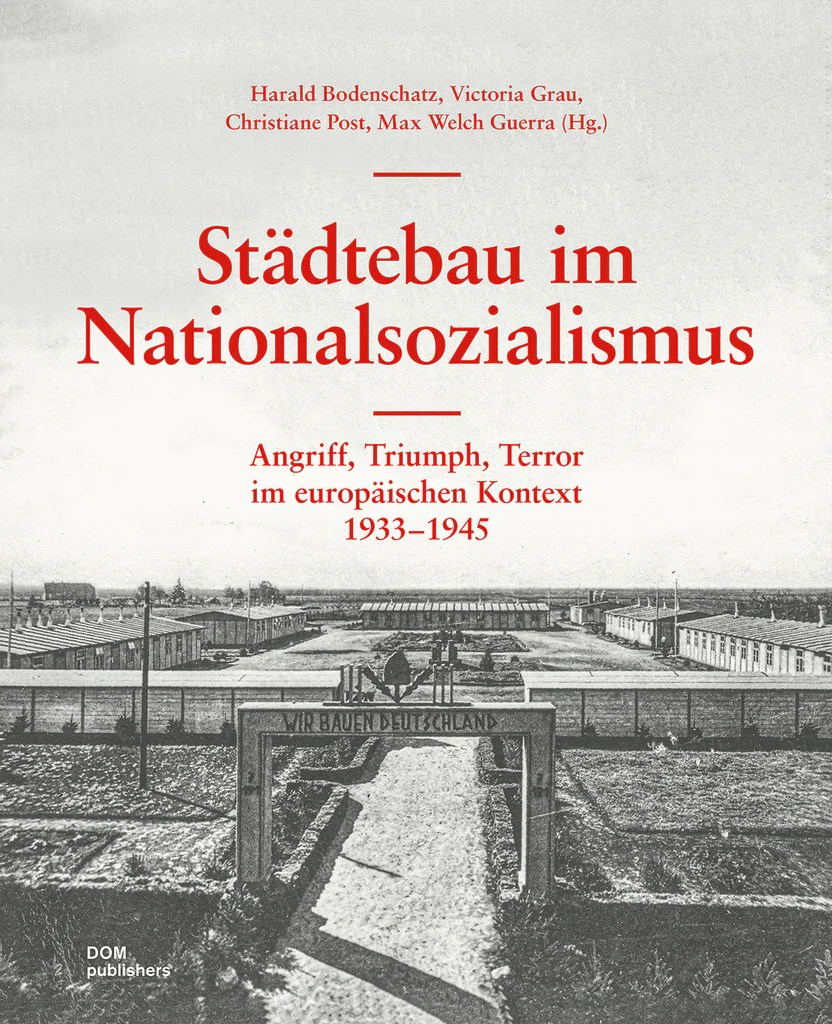
Urban Planning in Nazi Germany – Attack, triumph, terror in the European context 1933–1945

Book edited by Harald Bodenschatz, Victoria Grau, 
Christiane Post and Max Welch Guerra

Authors: Uwe Altrock, Harald Bodenschatz, 
Victoria Grau, Jannik Noeske, Christiane Post, 
and Max Welch Guerra

With contributions by Christian von Oppen 
and Piero Sassi

DOM publishers: Berlin 2025

Harald Bodenschatz, harald.bodenschatz@tu-berlin.de

Urban planning was an essential instrument of the National Socialist dictatorship. It served to legitimize rule and demonstrate strength, accompanied rearmament and war, conveyed the socio-political program, was a medium of competition with other states, tied old and new professionals to the regime, and systematically marginalized population groups. 

In this book urban planning under the Nazi dictatorship is for the first time examined not only as something that evolved during the different periods of Nazi rule but also in the context of other European dictatorships of the time. The period between 1933 and 1945 saw important changes in the focus of Nazi urban planning. These affected the cast of principal actors, the content of the regime’s propaganda, cities and areas affected, programs and practices, and winners and losers. The result of this survey is a multi-layered picture that goes beyond the usual presentation of well-known power-projecting buildings to take into account a range of other important aspects including housing construction, urban renewal, internal colonization, buildings for rearmament, large-scale infrastructure, industrial areas, educational institutions, and camps. 

This volume marks the conclusion of a series of academic publications on the subject of urban planning and dictatorship – in the Soviet Union, Italy, Portugal and Spain.

624 pages

700 illustrations

English edition

German edition

 ¿QUÉ HACER CON EL PATRIMONIO INCÓMODO? Reflexiones en torno al Arco de la Victoria de Madrid

International symposium, December 14-15 2023 (Complutense University of Madrid)

Carolina Rodríguez-López, Complutense University of Madrid, carolinarodriguez@ghis.ucm.es

A Global Campus

International Congress, November 22-24 2023 (Complutense University of Madrid)

Carolina Rodríguez-López, Complutense University of Madrid, carolinarodriguez@ghis.ucm.es

About the project “A Global Campus: universities, cultural transfers and experiencies in the 20th century”

This project aims to analyze the social, cultural, political and diplomatic dimension of university life, taking the space and the notion of campus (real, symbolic, imagined or transferred) as the concrete setting for these developments.

We understand the university campus from a double dimension: as a continent and as a space full of content and meanings. Our approach to this dual object of study, the campuses and the experiences developed in them, combines points of view from different domains.

The main objective of this project is to offer a global portrait of the university campuses in all their dimensions and interrelation capacities in order to know about them those aspects that go far beyond the basic functions expected of the university: teaching and research.

We have had at least three frames in which include and share our researches: the Complutense Research Group EXPEhistoria: ideas, knowledge and experiences, the Complutense Seminar on Universities’ History and CIAN- Journal of the History of the Universities.

Further information on the research project > Un Campus Global

Download the conference program  > International Congress 2023

Reuse

Symposium, 1-2 July 2023

Akademie der KünstePariser Platz 410117 Berlin

HG Merz, Harald Bodenschatz, Benedikt Goebel, Carolin Schönemann, Akademie der Künste, harald.bodenschatz@tu-berlin.de

The symposium accompanies the exhibition on planning and building in the National Socialist era and examines how the legacies of the dictatorships of the first half of the 20th century are dealt with in Europe. The speakers will present examples of places in Germany, Italy, Poland, Spain and Ukraine. European politics of remembrance are often dominated by national tunnel vision. It is therefore time for a cultural and political exchange about the respective approaches.

The culture of remembrance that Germany cultivates today differs considerably from that found in other countries. In Italy, experts recognise virtually every significant work of architecture and type of building that came about and every architect who worked under the dictatorship. Buildings are declared works of art and are often placed outside of their historical context. Architecture and symbols of the dictatorship such as the fasci — bundles of several wooden twigs, often called “bundles of twigs” — and Fascist calendar numbering are not only preserved and maintained, but are also restored and renovated. For the most part, on-site historical explanations are not provided.

During the Putin era in Russia, the memory of the Stalinist period has been gradually nationalised, steered and transformed into a culture of reverence. In Spain, a culture of forgetting was for decades supported through legislation. This is currently changing, as shown by the reinterment of the remains of General Franco in 2019, and by renaming the Valle de los Caídos (“Valley of the Fallen”) the Valle de Cuelgamuros (“Valley of Cuelgamuros”) in 2022 — Spain’s largest mass grave, which buries more than 30,000 victims from the Spanish Civil War and which may no longer be used by Franco nostalgics for rallies in the future. In the European politics of remembrance, national tunnel vision is a widespread phenomenon. A cultural exchange on how to deal with the legacies of the dictatorships rarely takes place — Europe remains a task in this field as well.

Further information > Akademie der Künste

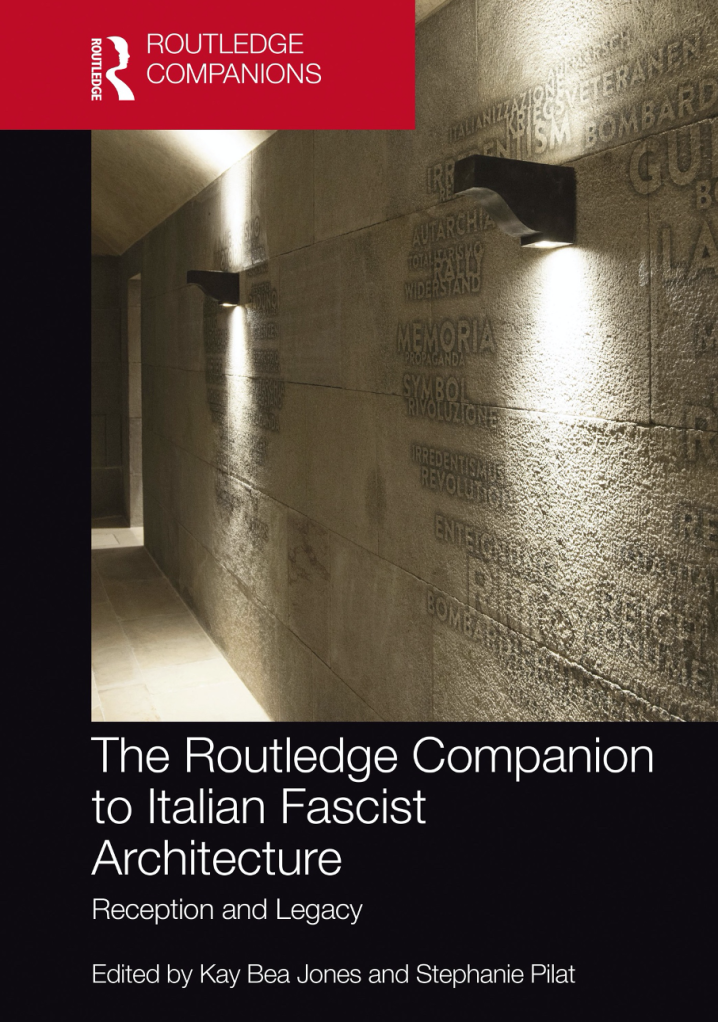
The Routledge Companion to Italian Fascist Architecture: Reception and Legacy

Book edited by Kay Bea Jones and Stephanie Pilat. 567 pages, New York: Routledge, 2020

Harald Bodenschatz, Technische Universität Berlin, harald.bodenschatz@tu-berlin.de

“Today, nearly a century after the National Fascist Party came to power in Italy, questions about the built legacy of the regime provoke polemics among architects and scholars. Mussolini’s government constructed thousands of new buildings across the Italian Peninsula and islands and in colonial territories. From hospitals, post offices and stadia to housing, summer camps, Fascist Party Headquarters, ceremonial spaces, roads, railways and bridges, the physical traces of the regime have a presence in nearly every Italian town.

The Routledge Companion to Italian Fascist Architecture investigates what has become of the architectural and urban projects of Italian fascism, how sites have been transformed or adapted and what constitutes the meaning of these buildings and cities today. The essays include a rich array of new arguments by both senior and early career scholars from Italy and beyond. They examine the reception of fascist architecture through studies of destruction and adaptation, debates over reuse, artistic interventions and even routine daily practices, which may slowly alter collective understandings of such places. Paolo Portoghesi sheds light on the subject from his internal perspective, while Harald Bodenschatz situates Italy among period totalitarian authorities and their symbols across Europe. Section editors frame, synthesize and moderate essays that explore fascism’s afterlife; how the physical legacy of the regime has been altered and preserved and what it means now. This critical history of interpretations of fascist-era architecture and urban projects broadens our understanding of the relationships among politics, identity, memory and place.

This companion will be of interest to students and scholars in a range of fields, including Italian history, architectural history, cultural studies, visual sociology, political science and art history.”

Re-Inhabiting Cold War NATO Bases – Valorization and Reuse of the NATO Base West Star (Site B)

International Summer School
University of Brescia, Italy
September 9th – 15th 2019

Eliana Perotti, Eidgenössische Technische Hochschule (ETH) Zürich, eliana.perotti@gta.arch.ethz.ch


Info:
olivia.longo@unibs.it
http://issre-incowanaba.unibs.it

Download Flyer > Re-Inhabiting Cold War NATO Bases – Valorization and Reuse of the NATO Base West Star (Site B)


Universitätsarchitektur und Diktatur – Eine europäische Perspektive

Lecture by Harald Bodenschatz
Open Lecture Series “Bauen für die Wissenschaft” (Technische Universität Berlin)
Thursday, May 16, 2019, 6 pm
Humboldt-Universität, Berlin, Unter den Linden 6, HS 1072

Harald Bodenschatz, Technische Universität Berlin, harald.bodenschatz@tu-berlin.de

Neue Universitätsstädte waren ein zentrales Thema des Städtebaus im 20. Jahrhundert, in Europa, vor allem aber auch in den USA. Besondere Aufmerksamkeit auf den Bau neuer Universitätsstädte legten die europäischen Diktaturen der ersten Hälfte des 20. Jahrhunderts. Die città universitaria in Rom ist zweifellos das bekannteste Beispiel einer solchen Neugründung. Universitätsstädte werden in der europäischen Städtebaugeschichtsschreibung bis heute oft übersehen, vor allem der Bau von Universitätsstädten in diktatorischen Systemen. Universitätsstädte scheinen nicht in das verbreitete Bild von Diktaturen zu passen, die oft als rückwärtsgewandt, antimodern, stagnierend, als Totengräber der Wissenschaften gezeichnet werden. Eine solche Sichtweise verkennt den Charakter der Diktaturen. Für die Durchsetzung ihrer Programme, ihrer Wege zur Modernisierung waren sie auf Experten dringend angewiesen, möglichst auf Experten, die nicht mehr aus der Zeit vor den Diktaturen stammten.

Download invitation > Bodenschatz_Universitätsarchitektur und Diktatur

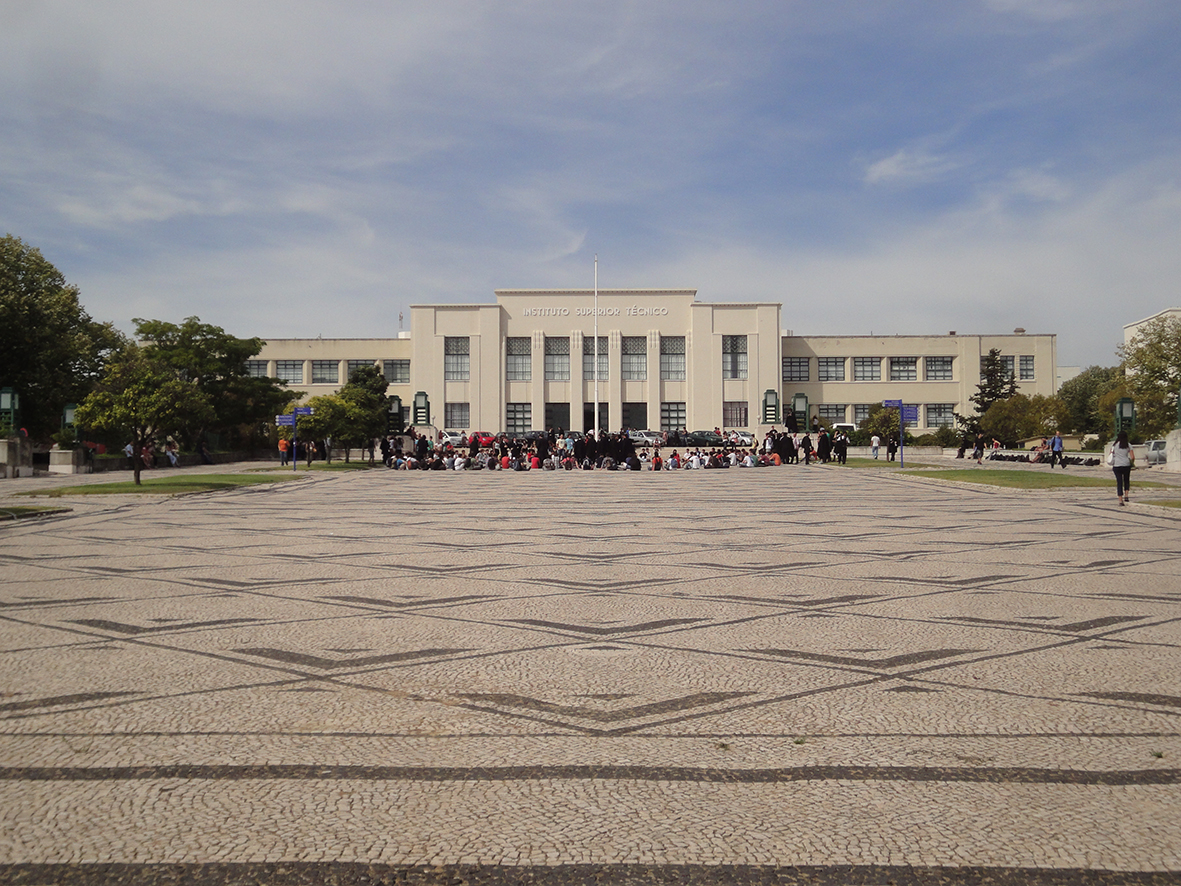
Technische Hochschule von Lissabon_Bodenschatz

Technische Hochschule von Lissabon (Instituto Superior Técnico), von Pardal Monteiro geplant und errichtet 1928 bis 1937. Foto Harald Bodenschatz, 2012, CC BY-NC-ND 4.0

Progetti abitativi a Venezia, 1922-1939. Prodotti e condizioni di produzione dell’edilizia abitativa durante il fascismo italiano

Tesi di laurea di Jannik Noeske
Bauhaus-Universität Weimar
Titolo originale „Venedigs Wohnbauprojekte 1922-1939. Produkte und Produktionsverhältnisse des Wohnungsbaus im italienischen Faschismus“
Corso di laurea „Bachelor Urbanistik“, 2017

Jannik Noeske, Bauhaus-Universität Weimar, jannik.noeske@uni-weimar.de

Durante il periodo a cavallo tra le due guerre, la famosa città storica di Venezia ha subìto profondi cambiamenti. Accanto alla realizzazione di progetti edilizi culturali e infrastrutturali, troviamo anche l’edificazione di quartieri residenziali. Questa tesi di laurea esamina quattro progetti abitativi eseguiti durante il ventennio fascista. Questi sono: Sant’Elena, costruito dal 1923 nella parte sud-orientale della città lagunare; Santa Marta, edificato al contempo nella parte industriale a sud-ovest; San Girolamo, quartiere minore e semplice, eretto nella parte nord-occidentale a partire dal 1929; la Celestia, ultimo quartiere costruito prima della caduta del regime, influenzato dalla razionalizzazione dell’edilizia abitativa alla fine degli anni ‘30. Per l’esecuzione di tutti i progetti fu responsabile l’istituto per le case popolari Venezia (IACP).

Un punto cardine del lavoro di ricerca è costituito dall’analisi delle condizioni di produzione dell’urbanistica e dell’edilizia abitativa durante questi anni. A tale scopo, non sarebbe bastato rivolgere unicamente l’attenzione allo sviluppo economico, urbanistico e culturale della città di Venezia – e in particolare della città lagunare, divenuta «centro storico» a causa dell’espansione industriale e amministrativa verso la terraferma. Nei progetti analizzati è possibile, infatti, riscontrare l’influenza del regime fascista, ma anche dei gruppi sociali che da esso hanno tratto vantaggio, sullo sviluppo urbano e sulla politica abitativa in Italia. Vengono pertanto esaminate le politiche dell’economia abitativa e della modernizzazione edilizia, come anche le politiche sociali del governo fascista. A causa di evidenti contraddizioni, in quegli anni non fu possibile portare avanti una politica urbana coerente. In questo ebbero un ruolo fondamentale i piani risalenti al periodo prefascista, che venivano implementati durante la dittatura, attori prettamente interessati al contesto locale e priorità economiche.

Viene preso in considerazione, non da ultimo, il contesto europeo nel quale nacquero questi quartieri. Come vennero presentati al pubblico internazionale? Quali furono le reti e le piattaforme che influenzarono la produzione di edilizia abitativa a Venezia tra il 1922 e il 1939?

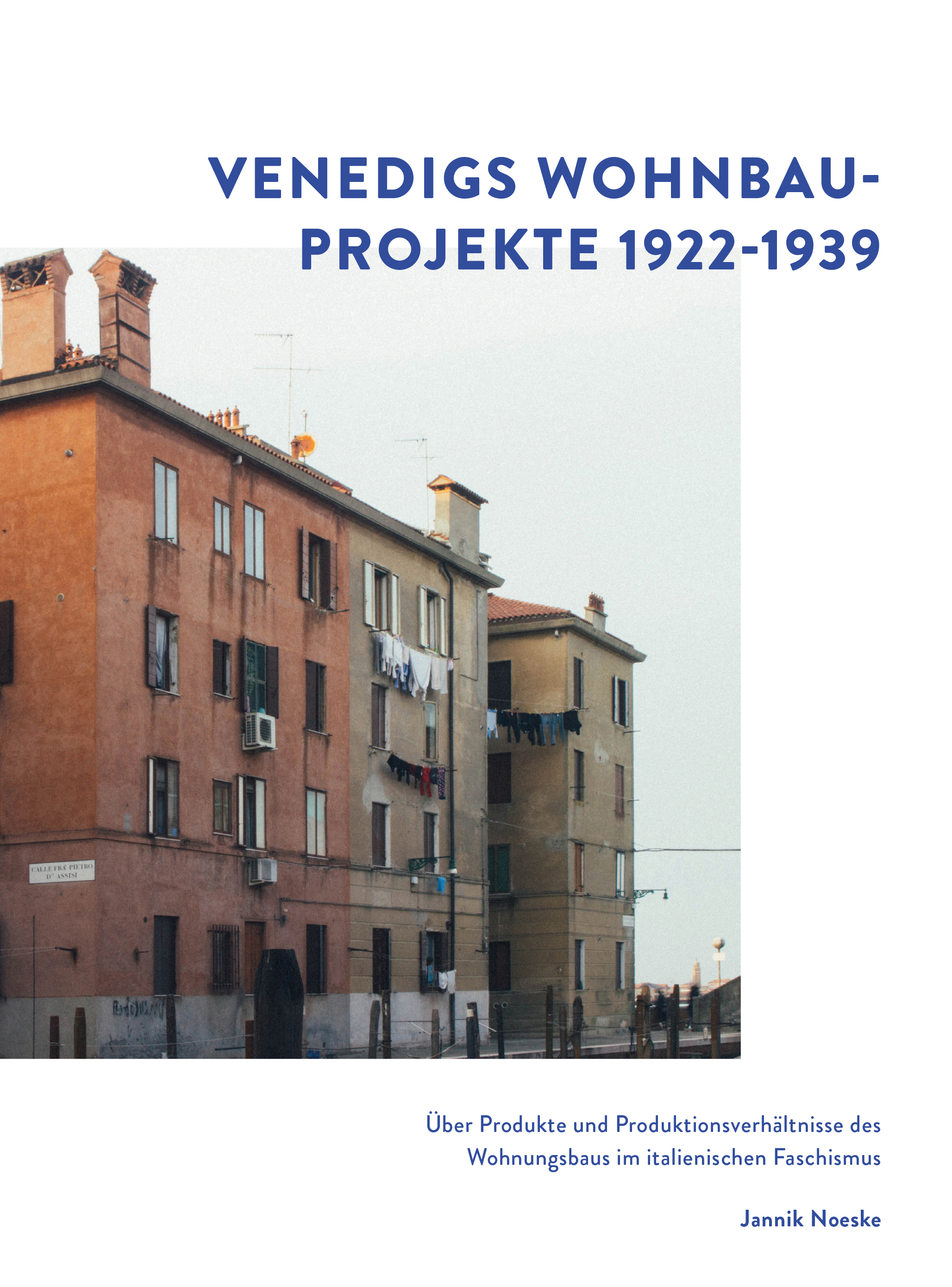
Venedigs Wohnbauprojekte 1922-1939. Produkte und Produktionsverhältnisse des Wohnungsbaus im italienischen Faschismus

In den Zwischenkriegsjahren erfuhr die weltbekannte Altstadt von Venedig zahlreiche Veränderungen. Nicht nur kulturelle und infrastrukturelle Bauprojekte wurden durchgeführt, es entstanden auch Wohngebiete. Die Abschlussarbeit untersucht vier Quartiere, die zur Zeit des faschistischen Regimes in der Altstadt von Venedig realisiert wurden. Das sind Sant’Elena, ab 1923 im Südosten der lagunaren Altstadt errichtet und Santa Marta, zeitgleich im industriellen Südwesten gebaut sowie San Girolamo, ein kleines und einfaches Wohngebiet im Nordwesten, das ab 1929 entstand und Celestia, als letztes der Gebiete schon deutlich von Rationalisierungsbestrebungen geprägt und erst Ende der 1930er Jahre errichtet. Für alle diese Wohngebiete zeichnet sich das Istituto autonomo per le case popolari Venezia verantwortlich.

Ein besonderes Augenmerk wurde dabei auf die Produktionsverhältnisse der Stadtentwicklung und des Wohnungsbaus dieser Jahre gelegt. Hierfür waren nicht nur die wirtschaftliche, städtebauliche und kulturelle Entwicklung der Stadt Venedig – und hier besonders die Rolle der Altstadt – von Bedeutung, die durch die Erweiterung der industriellen Funktionen und administrativen Grenzen auf das Festland erst zum centro storico wurde. Auch der Einfluss des faschistischen Regimes und seiner Profiteure auf die Stadtentwicklungs- und Wohnungspolitik in Italien hat seine Spuren in den Wohngebieten hinterlassen. Hier werden die wohnungswirtschaftlichen, die modernisierungspolitischen und die sozialen Politiken der faschistischen Regierung analysiert. Im Spannungsfeld von fortgeführten Planungen aus vorfaschistischer Zeit, lokal geprägten und fokussierten Akteuren oder wirtschaftlichen Prioritäten konnte dabei keine kongruente Politik ausgebildet werden.

Nicht zuletzt wird auch der europäische Kontext betrachtet, in dem die Wohngebiete entstanden sind. Wie wurden sie vor internationalem Publikum präsentiert und was waren die Netzwerke und Plattformen, die den Wohnungsbau in Venedig zwischen 1922 und 1939 geprägt haben?
coverend.indd

Madrid. Transformation einer Großstadt – Madrid. Transformación de una gran ciudad

Symposium
1 February 2018, 9h00 – 18h00
Thomas-Dehler-Straße -10787 Berlin
Organized by the FH-Potsdam/Potsdam School of Architecture and the TU-Eindhoven with the support of the Embassy of Spain in Berlin

Silvia Malcovati, Potsdam School of Architecture, malcovati@fh-potsdam.de
Bernd Albers, Potsdam School of Architecture, BA@berndalbers-berlin.de

Download invitation > Madrid_Symposium_Einladungskarte
Download programme > PROGRAMM

Madrid.jpg


Modernism, modernisation and the rural landscape

Call for papers,
MODSCAPES_conference2018
10-13 JUNE 2018 (Tartu, Estonia)

Simon Bell, Estonian University of Life Sciences, Simon.Bell@emu.ee
Axel Fisher, Université Libre de Bruxelles, axel.fisher@ulb.ac.be
Vittoria Capresi, Technische Universität Berlin, vittoria.capresi@tu-berlin.de

The impact of the Modern Movement and modernisation processes on rural landscapes in Europe and beyond is a widespread but little known, recognised or understood phenomenon which still exerts effects today. Within the third joint research programme of HERA (Humanities in the European Research Area) dedicated to “The uses of the past” which started in 2016, this subject is now being studied through several lenses within the MODSCAPES project.

Read more > MODSCAPES_conference2018

KEY DATES:

Abstracts should be submitted by January 7 2018 (23:59@EET) to the conference management system (via submission Platform https://modscapes.emu.ee/openconf.php).

Abstracts will be double peer reviewed and decisions on acceptance, rejection or revision will be sent out by February 9 2018.

Revised abstracts should be submitted by February 19 2018

Full paper text should be submitted by March 31 2018

Papers will be double peer reviewed and decisions on acceptance or revision will be sent out by April 30 2018

Final papers should be submitted by May 14 2018

eamfk7801_1-2b5f27c

Padise Kindergarten (Estonia). Architect: Anastasja Varus, 1970ies-80ies. Source: Museum of Estonian Architecture, Eesti Arhitektuurimuuseum (EAM Fk 7801)