Skip to content

Posts from the ‘Publications’ Category

Architetti e architetture dell’“Era Fascista”

Book by Carlo Cresti. Florence: Angelo Pontecorboli Editore, 2015.

Maria Luisa Neri, Università di Camerino, neriml@alice.it

Contents:

5 Prologo
7 Progettavano in camicia nera
35 Il Monumento della Vittoria, di Marcello Piacentini, a Bolzano
49 Enrico Del Debbio e lo ‘Stadio die Marmi’ al Foro Mussolini
69 Adalberto Libera: il vincitore die ludi architettonici die fasci littorii
91 Mario Palanti: la frenesia architettonica da fascismo
149 Il ‘Colosseo Quadrato’ dell’E42
167 Gherardo Bosio: una breve, significativa presenza nell’architettura italiana degli anni Trenta
201 Episodi di monumentalità fascista in Puglia
219 Colonie marine e montane realizzate negli anni del fascismo
235 La cancellazione die simboli del fascismo: un inutile atto di iconoclastia

Download book description> Carlo Cresti_Architetti e architetture dell’“Era Fascista”

254 pages
150 figures
14,8×21 cm
ISBN 978-­‐88-­‐97080-­‐83-­‐1
€19.50

Cover

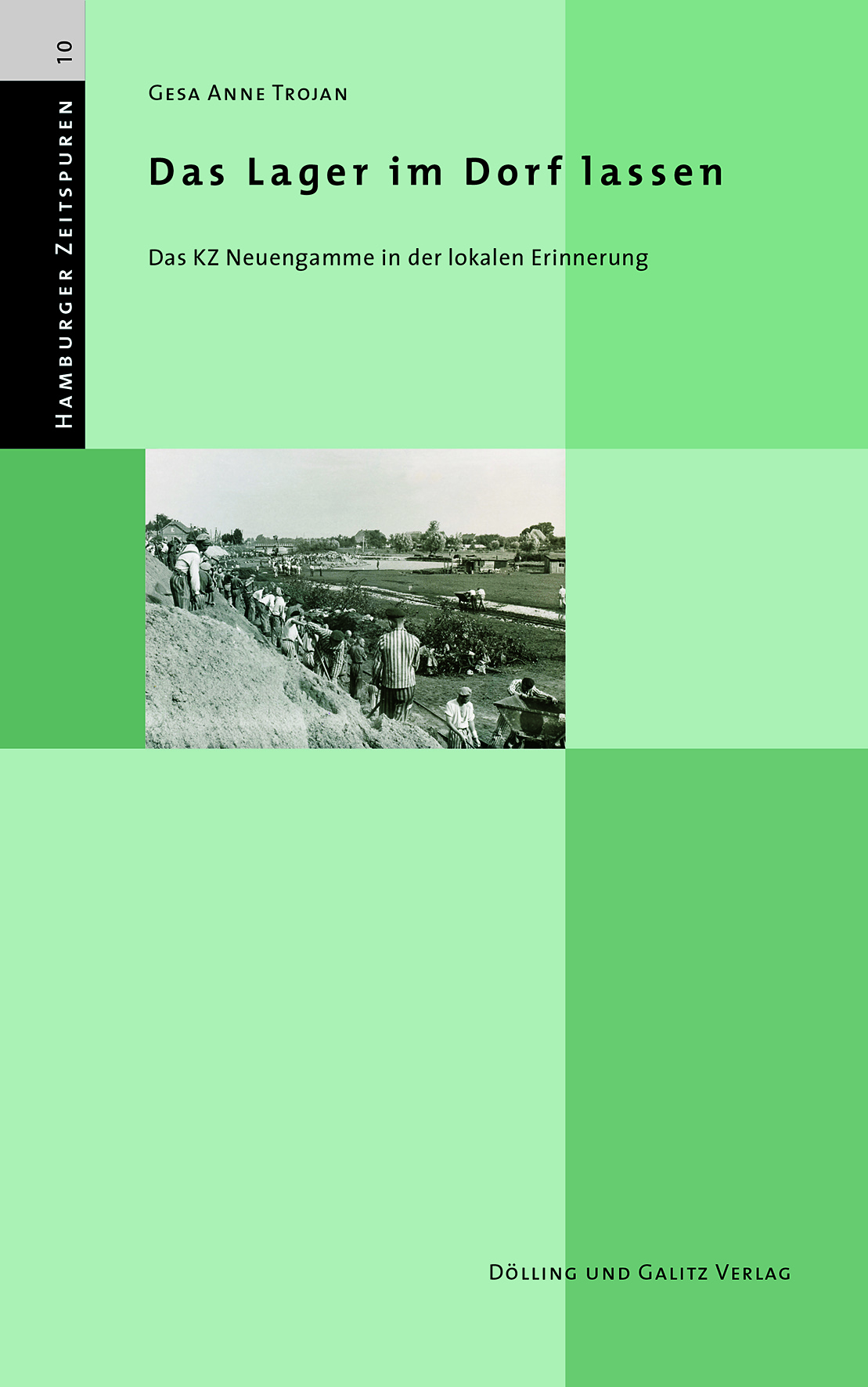
Das Lager im Dorf lassen. Das KZ Neuengamme in der lokalen Erinnerung

Book by Gesa Trojan. Hamburg / München: Dölling und Galitz, 2014.

Gesa Trojan, Technische Universität Berlin, gesa.trojan@metropolitanstudies.de

Located in the midst of the north German village of Neuengamme lies the site of a former National Socialist concentration camp. Set up by the SS in 1938, the perpetrators left the camp by the end of WW2. During the post-war decade the site changed into a penal facility and finally into a memorial. Simultaneously Neuengamme was the site of political conflicts concerning its historical heritage of this place and how to deal with it. Additionally Neuenagmme was and is the home of the local villagers, who lived and live with and around the former concentration camp.

Within this context I examined the local village residents’ perception of the former National Socialist concentration camp of Neuengamme. Within the tension field of cultural memory theory and the correlations of memory and space I focused on the following questions: How do the villagers remember the former camp in the village today? Do they consciously remember at all? And if so, how are memories shared and passed on from one generation to the next? Which role does the relationship between supra-regional policy of remembrance and local memory play on-site?

By employing the methodological instrument of Oral History, I conducted 17 biographical interviews with local residents of different ages. In consideration of Maurice Halbwachs’s fundamental theoretical concepts of memory and its social conditions I scrutinized the entanglement of memory related policies and the local memories of the Neuengamme concentration camp. Rather than providing definite answers, the aim of this project is to reveal disruptions, dissonances and conflicts between the different memory frameworks and put these up for discussion.

Dugverlag HH

Methodological basis of the study of urbanization in the USSR

Article by Mark Meerovich, published in / Фундаментальные исследования РААСН по научному обеспечению развития архитектуры, градостроительства и строительной отрасли Российской Федерации в 2014 году: сб. науч. тр. РААСН / Юго-Западный государственный университет; под ред. А.В. Кузьмина и др. Курск: Изд-во «Деловая полиграфия», 2015. – 662 с., С. 364-376.

Mark Meerovich, Irkutsk State Technical University, emark@inbox.ru

Download full Text (in Russian):
Methodological basis of the study of urbanization in the USSR_Meerovich

Urban Design for Mussolini, Stalin, Salazar, Hitler and Franco During the Interwar Period

Session M50 at the 12th International Conference of the European Association for Urban History (Lisbon, September 3–6, 2014)

Conference Publication

Christian von Oppen, Technische Universität Berlin, christian.von.oppen@uni-weimar.de

Urban design played a central role for the European dictatorships during the 20th century, it served to legitimate the regime, to produce agreement, to demonstrate power, efficiency and speed, it communicated the social, as well as design projects, of the dictatorial regimes domestically and internationally, it tied old experts, as well as new, to the regime. Dictatorial urban design also played an important role after the fall of the dictatorships: It became the object of structural and verbal handling strategies: of demolition, of transformation, of reconstruction, of forgetting, of suppressing, of re-interpretation and of glorification. The topic area is, therefore, both historical and relevant to the present day. The discussion of the topic area is, like it or not, always embedded in the present state of societal engagement with dictatorships.

Read more and download full papers >

Politics and Public Space in Slovakia between 1938 and 1945:
The example of Prešov

Martin Pekár
Pavol Jozef Šafárik University in Košice, Slovakia

The Stalinisation of Estonian town planning: visions and heritage
Siim Sultson
University of Technology, Estonian Entrepreneurship University of Applied Sciences – Tallinn – Estonia

Stalin’s Sacred Capital:
Dreams and Reality, Propaganda and Necessity in 1930s Moscow

Olga Zinovieva
Lomonosov Moscow State University

An Urban History of the Twentieth Century? Historiographic reflexions

Call for papers, Ciudades 19 (2016)

María Castrillo Romón, Universidad de Valladolid, mariacr@arq.uva.es

logo_Ciudades_A

We are currently celebrating the centenary of the first movements, exhibitions, congress and competitions on urbanism which took place in Europe. For this reason several scientific meetings encourage the discussion on history of urbanism and towns on the Twentieth Century. For essence, journal Ciudades dedicated its 6th issue (2001) to the centenary of the launch of “Garden Cities of Tomorrow” (http://www3.uva.es/iuu/ciud06.htm); the Berlin University of Technology has inaugurated the exhibition “City visions 1910 / 2010. Berlin Paris London Chicago. 100 years General Urban Design Exhibition in Berlin (‘Allgemeine Städtebau-Ausstellung in Berlin’)” (http://architekturmuseum.ub.tu-berlin.de/index.php?set=1&p=451&LANG=EN); a powerful group of research laboratories located in Paris have already organised two congress on the topic “Inventer le Grand Paris”, starting with the works of the Commission of Extension of Paris from 1913 to 1919 (http://www.citechaillot.fr/fr/auditorium/colloques_conferences_et_debats/colloques/25377-inventer_le_grand_paris.html), and the Bauhaus Universität Weimar is preparing the commemoration of its own foundation.

All these germinal events have in common their internationality. Whether these celebrated facts arose with the ‘international’ feature or they have acquired it because of the expansion out of the own country, they give proof of a speech that has gone beyond countries and even continents in the early twentieth century, as stated by several authors (Topalov 1999). However, the extensive bibliography on the History of Urbanism on the Twentieth Century usually gathers local or national monographs. And, when they try to reach an international focus, they tend to juxtapose case analyses by countries. This is one of the contradictions that are currently being discussed by research teams from the Universities of Weimar, Paris?Est and Valladolid. In this context, several meetings have been organised in order to study the relevance, the interest and the conditions of possibility of the History of European Urbanism on the Twentieth Century.

Within those discussions several questions have emerged, that Ciudades would like to propose in order to open a debate. The objective is to look at the most convenient study framework in order to understand the evolution over time of urban facts. Monographs covering towns have largely developed. But, beyond local level, which geographical frameworks could take into account the most general evolutions and which could be the most efficient categories of analysis for studies on other scales? Which are the new requirements and perspective for a pertinent comparative approach? These are general questions, but more specific ones are also interesting: does it make sense to consider a History of European Urbanism on the Twentieth Century?; in a historical moment crossed by (de)colonization, conflicts, profound political changes and wars, what or which could be the pertinent territorial frameworks which not only will create changing polarities but also will redesign national and international frontiers?; What “20th Century” should we take into account?: the “long Century” (Arrighi, 1999) defined by economic cycles, covering since 1880 or even since 1860?; the political Century starting with the First World War?; or a Century covering much less than 100 years, reduced to the period of Union European consolidation as an international urban actor?

But, closely connected to the previous questions, a basic interrogation is set out: is it relevant to support the reflection on the history of urbanization or should we consider urban history? Urban history, history of city building history, town planning and urban design history, history of urbanization… These concepts refer to different objects (social formations, urbanized areas, ideas, public action on urbanism…) and diverse disciplines and approaches. Nevertheless, sometimes they are not clearly differentiated. Alvarez Mora, in “La necesaria componente espacial en la historia urbana” (1996) has raised the problem concerning the relation between urban history, seen as a branch of social history, and town planning and urban design history, whose epistemological basis would be the urban area itself. And this area would be considered as a conflicting social product and not as a simple place for social facts. But, how could we grasp the complexity of building the urban area from a non?local level and a fortiori from an international scale? History often finds it difficult to go beyond ideas. It covers flow and reception of intellectual production on urbanism or dominant models of public action, avoiding at the same time the city built out of those flows and unregulated processes, and also omitting that those ideas come from an specific urban context. Therefore, this monograph also focus on a historiographic criticism with a prospective forecast, whether applied (new problems, methods of analysis, etc. that could be acceptable or interesting for international urban history on the Twentieth Century), or theoretical (analysis of historiographic production on the urban dimension, its evolution and tendencies). The question on the possibility of an urban history is again drawn up on a general basis, but that question could be reconsidered on particular contexts, properly justified.

We accept articles of different types:

– Articles debating epistemological aspects of urban historiography, starting from the analysis of specific facts or concepts.

– Articles on European Urban History with a particular object.

– Articles which, following the same theoretical aims, examine the history of the construction of urbanism, both as an academic discipline and as a professional status.

– Reviews or critics regarding historiographic problems related with the urban.

Download call for papers: Ciudades19EN

Deadline for submission of papers (see guidelines for authors): 10th September 2015.

Coordinators: María Castrillo y Charlotte Vorms

To send the articles (only by e‐mail) to the secretary of Ciudades: revistaciudades@arq.uva.es.

The editorial guidelines for the elaboration and the remission of the articles are explained in: http://www3.uva.es/iuu/Marcos_R.htm

Bibliographic references:

Álvarez Mora, A. (1996). “La necesaria componente espacial en la historia urbana”, Ayer, núm. 23, pp. 29-59.

Arrighi, G. (1999). El largo siglo XX. Barcelona, Akal.

Topalov, C. (dir.) (1999), Laboratoires du nouveau siècle. La nébuleuse réformatrice et ses réseaux en France, 1880-1914, Paris, EHESS.

Urbanism and Dictatorship – A European Perspective

Book presentation
Monday, May 4, 2015. 7 pm
Bücherbogen, Savignyplatz (Berlin)

Organized by Bücherbogen am Savignyplatz and Deutscher Werkbund Berlin e.V.

Guests: the authors Christine Beese, Harald Bodenschatz, Thomas Flierl, Christian von Oppen, Piero Sassi and Max Welch Guerra

Moderation: Claudia Kromrei (Deutscher Werkbund Berlin)

Piero Sassi, Bauhaus-Universität Weimar, piero.sassi@uni-weimar.de

Der Städtebau der europäischen Diktaturen in der ersten Hälfte des 20. Jahrhunderts diente nicht nur der Herrschaftssicherung im eigenen Lande, sondern auch der Anerkennung durch die demokratischen Staaten. Nach der Machtübergabe an das nationalsozialistische Regime geriet er mehr und mehr zur Trumpfkarte im Wettbewerb unter den großen Diktaturen Europas – fast wie in der Zeit des Absolutismus. Jenseits aller Konflikte und politischer Orientierungen bestand ein intensiver fachlicher Austausch unter den Ländern Europas.

Eine nur nationale Sichtweise auf die Diktaturen ist daher nicht hinreichend. Der übergreifende Blick trägt nicht nur dazu bei, die Besonderheiten der jeweiligen Diktatur zu klären, er weist auch manch vereinfachtes Verständnis von deren Städtebau zurück. Das ist keineswegs nur von historischem Interesse: Die Auseinandersetzung mit Diktaturen ist immer auch Ausdruck unserer gesellschaftlichen Verhältnisse, unserer Erinnerungskultur, unserer Fähigkeit, alte und neue Formen von Diktatur zu erkennen – auch heute!

Das Buch diskutiert den Stand der Forschung zum Städtebau von fünf Diktaturen der ersten Hälfte des 20. Jahrhunderts und präsentiert exemplarisch neue Forschungsergebnisse.

Urbanism_and_Dictatorship

Berlins historisches Zentrum – Wunden schließen mit der Liebe zu Mitte

Article by Harald Bodenschatz in: Tagesspiegel, 7.3.2015

Harald Bodenschatz, Technische Universität Berlin, harald.bodenschatz@tu-berlin.de

„Berlins historisches Zentrum ist ein Ort der jüngsten Vergangenheit – vor allem die beiden deutschen Diktaturen haben ihn geprägt. Bei den Überlegungen für die künftige Gestaltung wird das bisher kaum gewürdigt.“ Read More >

Berlin_Mitte_hb_2010_a

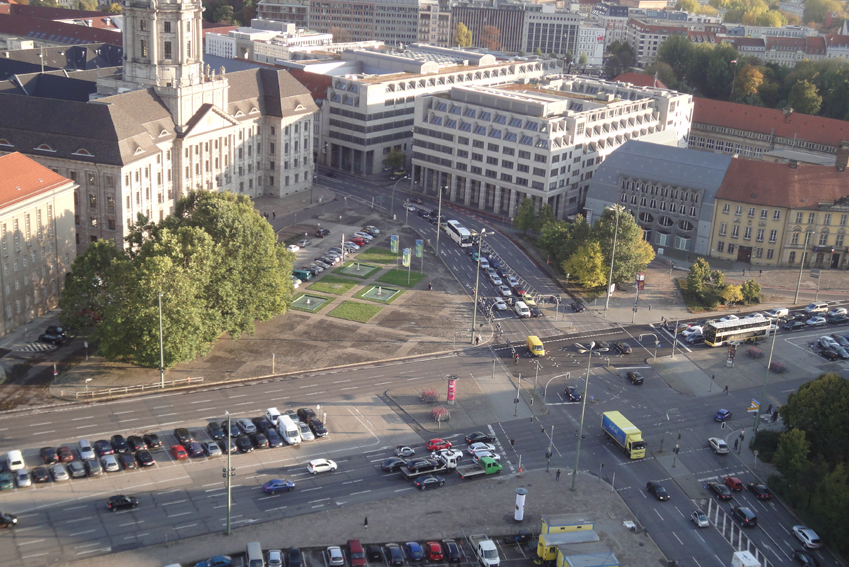
Wo einst das Zentrum des mittelalterlichen Berlin war, erstreckt sich heute eine unwirtliche Autoverkehrslandschaft – ein Produkt beider Diktaturen. Foto: Harald Bodenschatz 2010

Urbanism and Dictatorship – A European Perspective

Publication edited by Harald Bodenschatz, Piero Sassi and Max Welch Guerra (Birkhäuser Verlag, Bauwelt Fundamente 153, 2015)

Harald Bodenschatz, Technische Universität Berlin, harald.bodenschatz@tu-berlin.de
Piero Sassi, Bauhaus-Universität Weimar, piero.sassi@uni-weimar.de
Max Welch Guerra, Bauhaus-Universität Weimar, max.welch@uni-weimar.de

Urban design under European dictatorships in the first half of the twentieth century must be considered in an international context, as the professional and cultural exchange between European countries was – beyond conflicts and political orientations – very intensive. This European perspective allows us to recognize the specificities of old and new forms of dictatorship!

Download flyer: Urbanism_and_Dictatorship_2015

Urbanism_and_Dictatorship

Nationalsozialistische Neugestaltungspläne für Berlin

Review of the exhibition “Von Berlin nach Germania” (Berlin, Landesarchiv, from 7 November 1984 to 17 May 1985), published in the journal „kritische berichte“ 1/1985 by Harald Bodenschatz

Harald Bodenschatz, Technische Universität Berlin, harald.bodenschatz@tu-berlin.de

In den 1980er Jahren war meine Auseinandersetzung mit dem Städtebau der Diktaturen Europas noch unterentwickelt. Das änderte sich erst mit maßgeblicher Unterstützung Wolfgang Schäches. Die Ausstellung des Landesarchivs „Von Berlin nach Germania. Über die Zerstörungen der ‚Reichshauptstadt’ durch Albert Speers Neugestaltungsplanungen“ an der Wende der Jahre 1984/85 war nicht nur für die Berliner Öffentlichkeit, sondern auch für mich ein Meilenstein. Damals festigte sich mein Interesse für dieses Themenfeld, das mich seitdem nicht mehr loslassen sollte. In dem von Hans J. Reichhardt und Wolfgang Schäche konzipierten Ausstellungskatalog wurde eindrucksvoll vorgeführt, dass man beides betrachten muss, um den Städtebau der Diktaturen überhaupt verstehen zu können: die Architektur und den Städtebau als Form, aber auch die besonderen Produktionsverhältnisse, die zu dieser Form geführt haben. Ich schrieb damals einen ausführlichen Ausstellungsbericht, der im Heft 1/1985 der Zeitschrift „kritische berichte“ abgedruckt wurde.

Download full text: Nationalsozialistische Neugestaltungspläne für Berlin

katalogvonberlinnachgermania

Titel des Ausstellungskatalogs “Von Berlin nach Germania”, erste Auflage 1984

Mesto a dejiny (The City and History)

Martin Pekár, Pavol Jozef Šafárik University in Košice, martin.pekar@upjs.sk

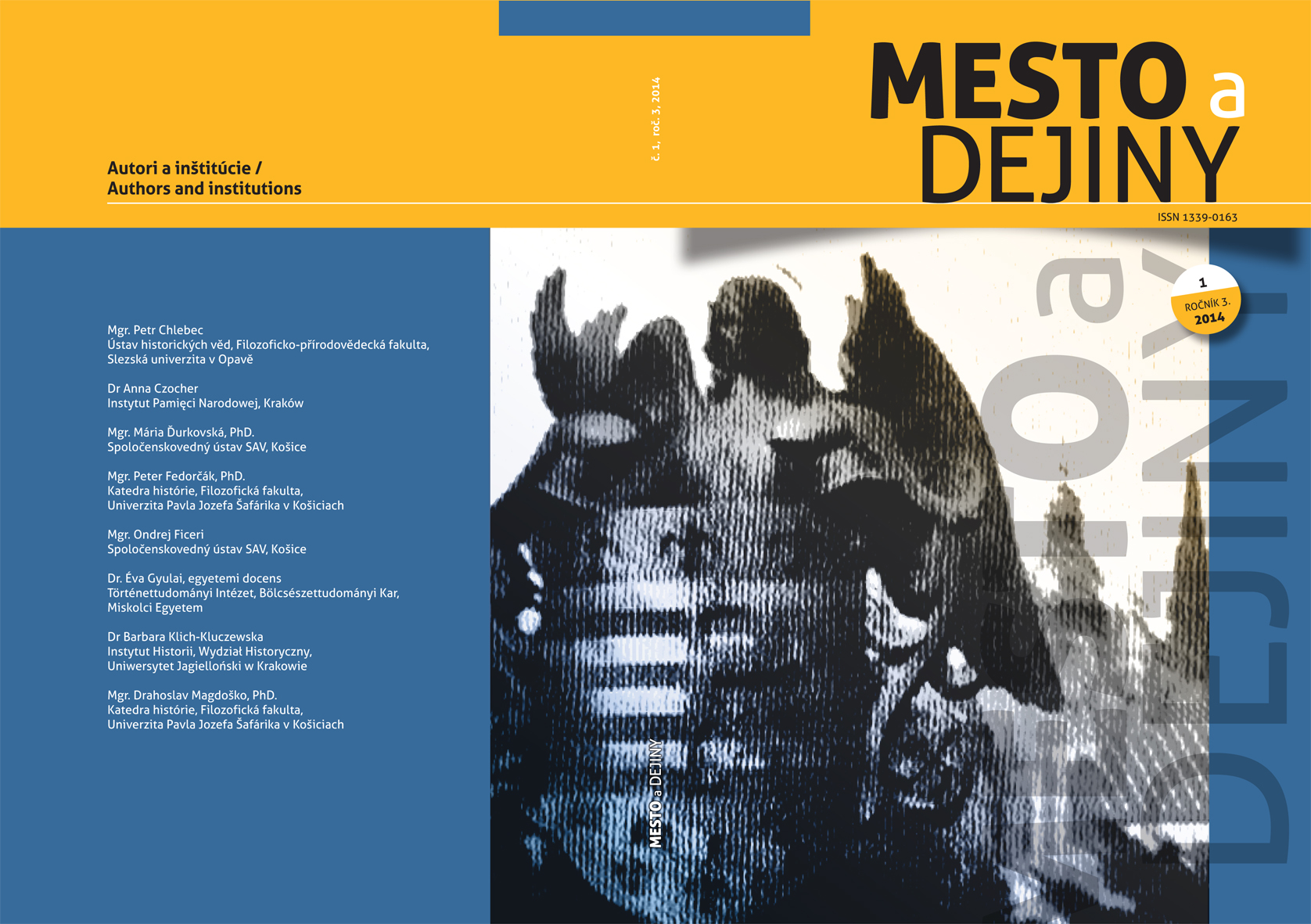
The printed journal Mesto a dejiny (The City and History), established in 2012, is an initiative of the Department of History of Pavol Jozef Šafárik University in Košice, Slovakia. The journal publishes contributions from history and related disciplines. It focuses in particular on the publication of the recent results of original scientific research by scholars from Slovakia and abroad in the field of urban history. The journal publishes contributions in Slovak, English or any other foreign language. Documents accepted primarily include: scientific studies, articles and papers, discussions, materials, documents, reviews and annotations reports from scholars in the fields of history, social sciences and other related disciplines. Read More >

Deadline for the forthcoming volume 1/2015: 28 February 2015.

Mesto_a_dejiny

Mesto a dejiny, 2014, vol. 3, no. 1.