Skip to content

Posts from the ‘Publications’ Category

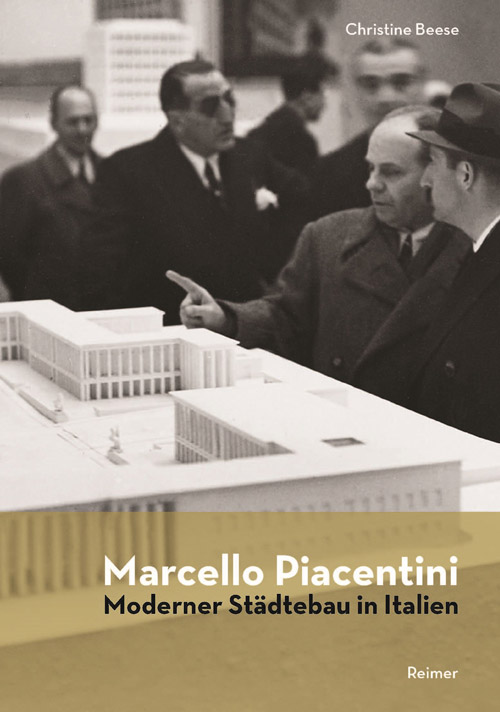
Marcello Piacentini. Moderner Städtebau in Italien

Book by Christine Beese, 624 pages, 252 images, Berlin: Reimer Verlag, 2015

Christine Beese, Freie Universität Berlin, c.beese@fu-berlin.de

Marcello Piacentini (1881–1960) gilt als der einflussreichste italienische Architekt des frühen 20. Jahrhunderts. Seine Piazza della Vittoria in Brescia, die Via Roma in Turin oder der römische Stadtteil EUR wurden zu Ikonen des architektonischen Städtebaus. Trotzdem ist Piacentini in Deutschland – wenn überhaupt – nur als »Architekt Mussolinis« bekannt.

Christine Beese zeigt in ihrer Studie, dass es sich lohnt, den »Dämonen« der italienischen Architekturgeschichte genauer zu betrachten. Denn trotz aller nationalistischen Rhetorik entwickelte Piacentini seine städtebaulichen Positionen im Kontext internationaler Leitbilder. Mit ihrer Arbeit hinterfragt die Autorin somit gängige Vorstellungen »diktatorischen Städtebaus« und liefert einen wichtigen Beitrag zur europäischen Stadtbaugeschichte des 20. Jahrhunderts.

Read more >

Cover

Urban design and dictatorship in the 20th century: Italy, Portugal, the Soviet Union, Spain and Germany. History and Historiography

Conference Publication

Piero Sassi, Bauhaus-Universität Weimar, piero.sassi@uni-weimar.de

For decades in Germany, historical research on dictatorial urban design in the first half of the 20th century focused on the National Socialist period. Studies on the urban design practices of other dictatorships remained an exception. This has changed. Meanwhile, the urban production practices of the Mussolini, Stalin, Salazar, Hitler and Franco dictatorships have become the subject of comprehensive research projects. Recently, a research group that studies dictatorial urban design in 20th century Europe has emerged at the Bauhaus-Institut für Geschichte und Theorie der Architektur und der Planung. The group is already able to refer to various research results.

Part of the research group’s self-conception is the assumption that the urban design practices of the named dictatorships can only be properly understood from a European perspective. The dictatorships influenced one another substantially. Furthermore, the specificities of the practices of each dictatorship can only be discerned if one can compare them to those of the other dictatorships. This approach requires strict adherence to the research methods of planning history and urban design theory. Meanwhile, these methods must be opened to include those of general historical studies.

With this symposium, the research group aimed to further qualify this European perspective. The aim was to pursue an inventory of the various national historiographies on the topic of “urban design and dictatorship”. This inventory should offer an overview on the general national level of historical research on urban design as well as on the level of particular urban design projects, persons or topics.

The symposium took place in Weimar, November 21-22, 2013. It was organized by Harald Bodenschatz, Piero Sassi and Max Welch Guerra and funded by the DAAD (German Academic Exchange Service).

About the Internationality of Urbanism: The Influence of International Town Planning Ideas upon Marcello Piacentini’s Work
Christine Beese
Kunsthistorisches Institut – Freie Universität Berlin – Germany

Landscape and City during Fascism: Enrico del Debbio’s Foro Mussolini
Maria Luisa Neri
Università di Camerino – Scuola di Architettura e Design – Ascoli Piceno – Italy

Planning the Industrialization. The Technical and Theoretical Toolbox for the Post-War Program for the Industrial Development Areas of Southern Italy
Nicla Dattomo
Università Iuav di Venezia – Italy

Restelo Neighbourhood: Expanding the Capital of the Empire with the First Portuguese Urban Planner
Patrícia Bento d’Almeida
Instituto Universitário de Lisboa – Portugal

Portuguese Social Housing under Dictatorship. A Morphological Analysis of Some Residential Agglomerations in Lisbon (1933-1950)
Maria Amélia Cabrita
Architecture – ISCTE, Lisbon, Portugal

Restelo in Lisbon – The Non-implementation of the Original Urban Design by Faria da Costa during the Dictatorship of António de Oliveira Salazar
Salete A. F. Cravo
Instituto Universitário de Lisboa – Portugal

Granite on the Ground: Former Nazi Party Rally Grounds, Nuremberg/Germany. A brief introduction
Marie Luise Birkholz
Bauhaus-Universität Weimar, Germany

Download full papers
Download conference program > flyer_symposium

symposium-1

Urbanistica e dittatura. Otto osservazioni / Städtebau und Diktatur. Acht Anmerkungen

Harald Bodenschatz, Technische Universität Berlin, harald.bodenschatz@tu-berlin.de

Presentation held by Harald Bondeschatz on October 24, 2015 at the exhibition “Cesare Valle. Un’altra modernità: Architettura in Romagna”, Forlì (Italy).

Download presentation > otto osservazioni_HB_it ; Acht Anmerkungen_HB_de

Ästhetik der Platte Wohnungsbau in der Sowjetunion zwischen Stalin und Glasnost

Book by Philipp Meuser, 728 pages, 1.400 images, Berlin: DOM publishers, 2015

Harald Bodenschatz, Technische Universität Berlin, harald.bodenschatz@tu-berlin.de

Der industrielle Wohnungsbau der Sowjetunion ist kein Thema neben vielen anderen, sondern ein Schlüsselthema der Architektur- und Städtebaugeschichte des 20. Jahrhunderts weit über Russland hinaus. Er umfasst in zeitlicher Hinsicht die lange Spanne von 1955 bis 1991 und betraf den Alltag von Millionen Sowjetbürgern, ja er betrifft den Alltag postsowjetischer Bürger noch heute. Das Zentrum des Buches bilden die Kapitel über die Städte Moskau, Leningrad und Taschkent. Nahezu unbekannt ist bislang der industrielle Wohnungsbau in Taschkent, der in den 1970er Jahren viertgrößten Stadt der UdSSR und Hauptstadt der usbekischen Republik, der als sowjetische Musterstadt des industrialisierten Bauens nach den Zerstörungen des Erdbebens im Jahre 1966 eine besonderer Bedeutung zukommt. Das Buch bereichert die Forschungslandschaft zu Architektur und Städtebau in der Sowjetunion entscheidend. Es ist auch außerordentlich schön gestaltet. Die zahlreichen Abbildungen sind ein unverzichtbarer Bestandteil der Argumentationsstruktur. Nolens volens trägt das Buch überdies dazu bei, den wissenschaftlichen Austausch zwischen Russland und Deutschland in Zeiten erkalteter Beziehungen zu pflegen.

Meuser_Plattte_978-3-86922-399-5_Cover

Gutachten zur bau-, stadtbau- und nutzungsgeschichtlichen Bedeutung des “Hauses der Parlamentarier” (ehem. Reichsbankgebäude), des Treuhandgebäudes (ehem. Gebäude des Reichsluftfahrtministeriums) und des ehemaligen Staatsratsgebäudes in Berlin

Harald Bodenschatz, Technische Universität Berlin, harald.bodenschatz@tu-berlin.de

Am 20. Juni 1991 beschloss der Deutsche Bundestag, den Sitz des Parlaments und der Regierung nach Berlin zu verlegen. Das diesem Beschluss folgende „Konzept für die Unterbringung der Bundesregierung in Berlin“ vom 8. Dezember 1992 sprach die Empfehlung aus, die ehemalige Reichsbank, das ehemalige Reichsluftfahrtministerium und das ehemalige Staatsratsgebäude zugunsten von Neubauten abzureißen. Damit waren zwei Großbauten der nationalsozialistischen Diktatur und ein Großbau der DDR-Diktatur bedroht. Vor diesem Hintergrund entstand das „Gutachten zur bau-, stadtbau- und nutzungsgeschichtlichen Bedeutung des ‚Hauses der Parlamentarier’ (ehem. Reichsbankgebäude bzw. ZK-Gebäude der SED), des Treuhandgebäudes (‚Detlev-Rohwedder-Haus’, ehem. Gebäude des Reichsluftfahrtministeriums) und des ehemaligen Staatsratsgebäudes“, das von Harald Bodenschatz, Johannes Geisenhof und Dorothea Tscheschner im Auftrag der Senatsverwaltung für Bau- und Wohnungswesen Berlin im Februar 1993 vorgelegt wurde. Das Gutachten plädierte für den Erhalt aller drei Gebäude.

Download full text: Gutachten

gutachtenstaatsratsgebäude_ua_19930001

George Matei Cantacuzino – a Hybrid Modernist

Book by Dan Teodorovici. Berlin/Tübingen: Ernst Wasmuth, 2014.

Dan Teodorovici, architect, author and curator, dan.teodorovici@web.de

The Romanian cosmopolitan architect and public intellectual George Matei Cantacuzino (b. Vienna, 1899–d. Jassy, 1960) was the integrative figure of Modernism in that country. In view of the age of extremes of the 20th century, both his classical attitude, which links Modernism to Traditions and Aesthetics to Ethics, and his intellectual integrity are remarkable.

He was educated at the Ecole des Beaux-Arts in Paris; in Bucharest he also became professor of architectural history and theory, painter and curator, the first Romanian correspondent of L’Architecture d’Aujourd’hui, honorary corresponding member of RIBA/London, and honorary citizen of New York. With his liberal political attitude being disapproved of by both fascists and communists, he experienced imprisonment, social exclusion, and an untimely death.

Offering a journey through his momentous life and work, this study tries to place it into a wide architectural, cultural, economic and political context. It also seeks to reveal the cornerstones of his classical attitude and to discern the “the springs which feed the river of his thought“ – from Vitruvius via Palladio and Schinkel to Loos and Perret, from Wölfflin via Wittkower to Gombrich, from Plotinus via Bergson to Camus, from Montaigne via Goethe to Rilke, Valéry and T.S. Eliot.

gmc book_wasmuth 2014_front cover

Urbanism and Dictatorship – A European Perspective

Book presentation
Saturday, October 24, 2015. 4:30 pm
Ex GIL building, V.le della Libertà 2, Forlì (Italy)

Organized by the Cultural Route “ATRIUM – Architecture of Totalitarian Regimes of the XX Century in Europe’s Urban Memory”

Guests: the editors Harald Bodenschatz, Piero Sassi and Max Welch Guerra; Patrick Leech (Cultural Route ATRIUM and University of Bologna) and Roberto Balzani (University of Bologna)

Piero Sassi, Bauhaus-Universität Weimar, piero.sassi@uni-weimar.de

Read more >

Urbanism_and_Dictatorship

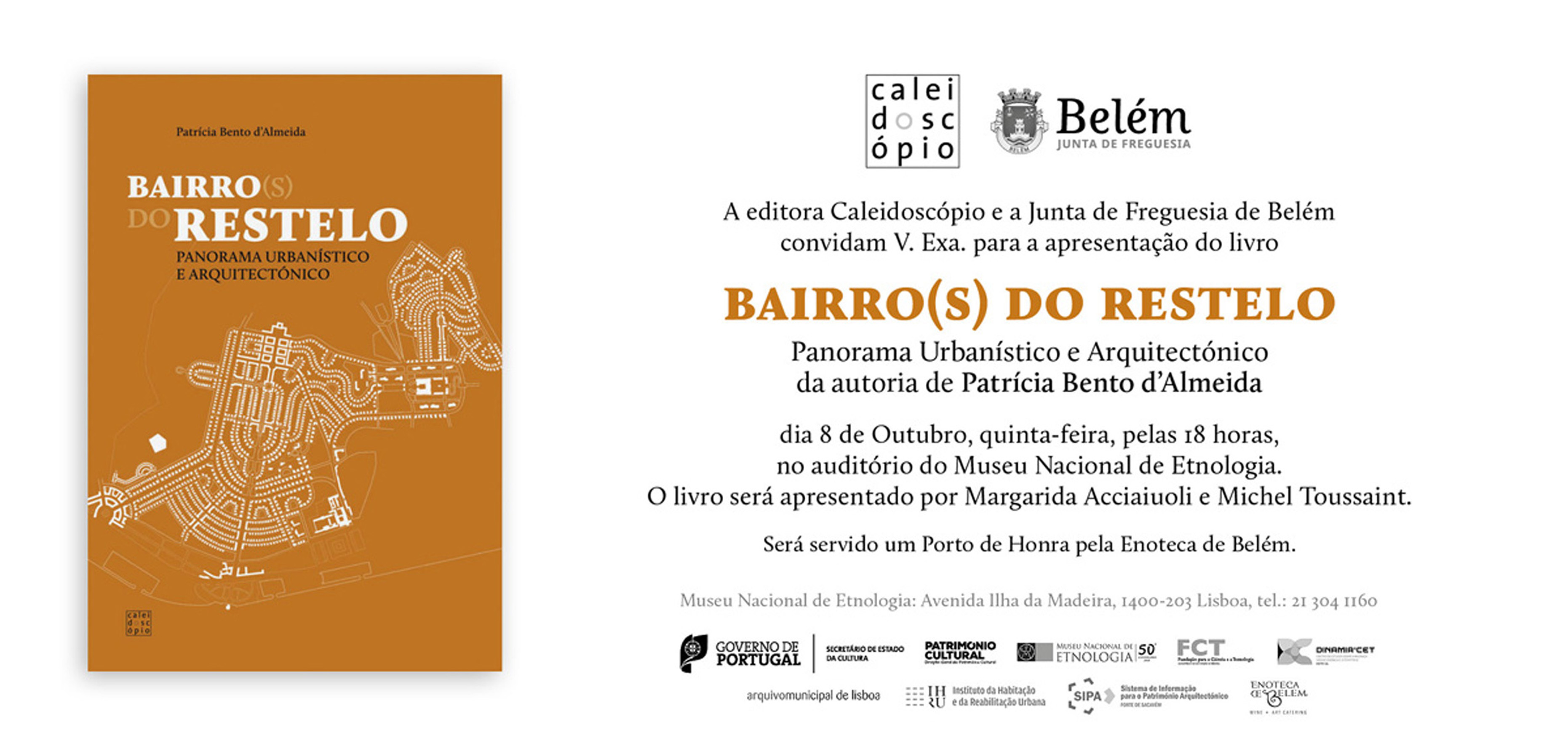
Bairro(s) do Restelo. Panorama Urbanístico e Arquitectónico

Book by Patrícia Bento d’Almeida, Lisbon: Caleidóscopio, 2015

Patrícia Bento d’Almeida, Instituto Universitário de Lisboa, pbdao@iscte.pt

The presentation will take place on Thursday, October 8 2015, in the auditorium of the Museu Nacional de Etnologia.

Convite-BairrosRestelo

Russian version of “Städtebau im Schatten Stalins. Die internationale Suche nach der sozialistischen Stadt in der Sowjetunion 1929-1935”

Book edited by Harald Bodenschatz and Christiane Post

Harald Bodenschatz, Technische Universität Berlin, harald.bodenschatz@tu-berlin.de

A Russian version of the book “Städtebau im Schatten Stalins. Die internationale Suche nach der sozialistischen Stadt in der Sowjetunion 1929-1935”, edited 2003 by Harald Bodenschatz and Christiane Post, has been published in 2015.

Буденшатц, Х.; Пост, К.
Градостроительство в тени Сталина. Мир в поисках социалистического города в СССР
ISBN: 978-5-9905540-0-9; Формат: оч. большой
Язык: русский

More information:

http://www.rcmm.ru/news/16966.html
http://realty.rbc.ru/articles/22/06/2015/562949995729086.shtml
http://www.knauf.ru/press/news/article.wbp?article_id=ee1d07d0-0dad-4d4d-b730-b4fd350e32f7
http://www.youtube.com/watch?v=ERZ_iuoHTaQ

Cover

Book reviews on architecture in fascist Italy

Eliana Perotti, Eidgenössische Technische Hochschule (ETH) Zürich, eliana.perotti@gta.arch.ethz.ch

Four book reviews by Mia Fuller published on 29 January 2015 in „Architectural Histories – The open access journal of the EAHN“. Read full Text >